Flower Meanings: What Popular Blooms Really Say—and Where the Myths Begin
A modern guide to flower symbolism that helps you choose thoughtfully without treating every traditional meaning as a universal rule.
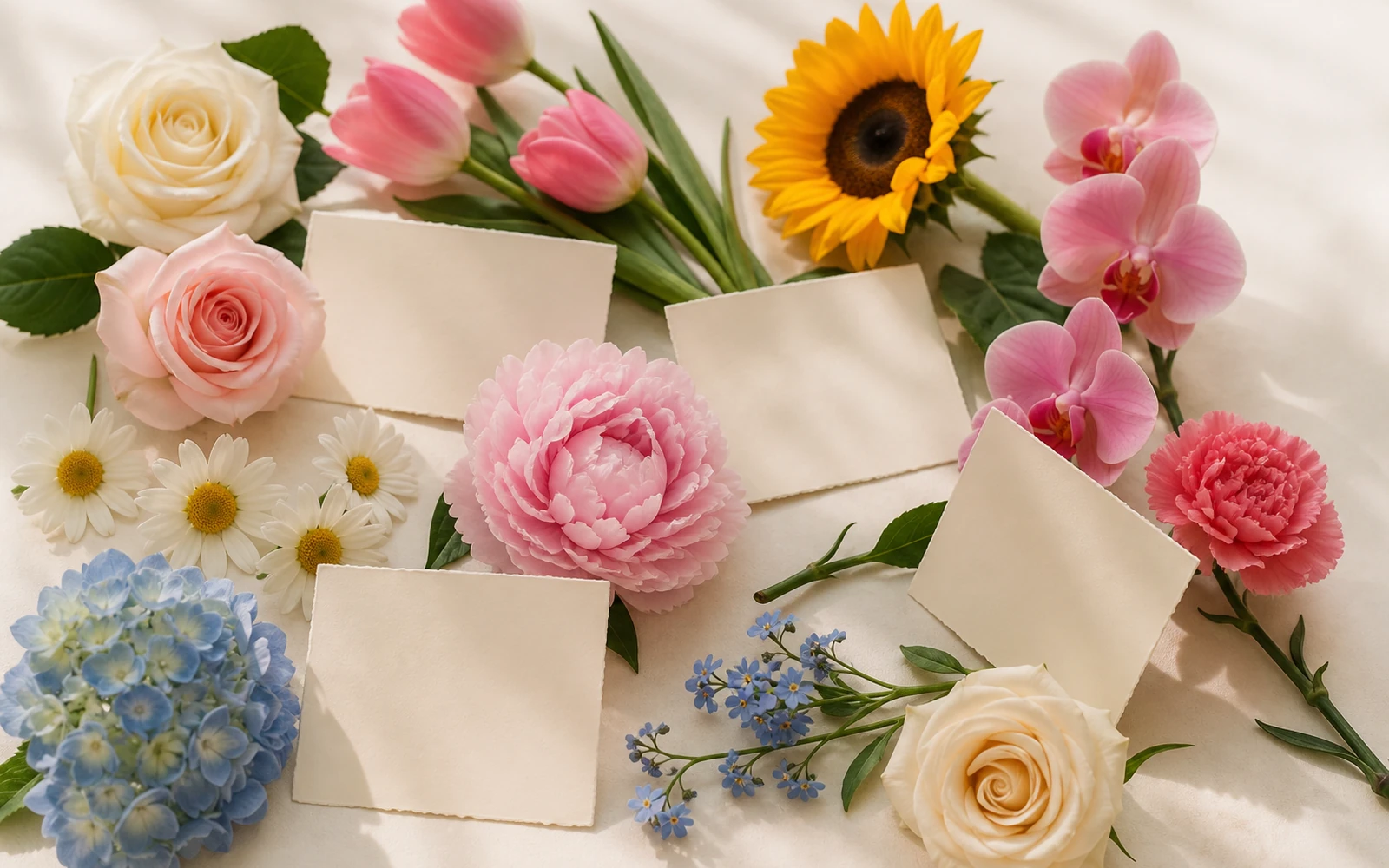
Flower meanings, in their most useful form, are a shortlist: red roses mean romantic love; pink tulips suggest care; sunflowers express adoration; orchids evoke delicate beauty; daisies suggest innocence; pink carnations convey gratitude; white carnations carry remembrance; hydrangeas represent perseverance; peonies carry a healing association; and forget-me-nots speak of lasting remembrance.
Those meanings come from cultural and historical traditions—including Victorian floriography—and from modern US gifting language. I use them as a strong starting point, then make the message personal through color, shape, occasion, recipient, and the words on the card. If you want to identify the flowers and their design roles first, begin with the visual guide to 40 types of bouquet flowers.
| Popular flower | Traditional or compiled association | My modern florist reading |
|---|---|---|
| Red rose | Passionate love | The clearest romantic declaration |
| Pink tulip | Care | Gentle affection without heavy formality |
| Sunflower | Adoration | Openhearted warmth and confidence |
| Orchid | Delicate beauty | Distinction, polish, and an unexpected edge |
| Daisy | Innocence | Freshness, ease, and optimism |
| Pink carnation | Gratitude | Affectionate thanks with texture and warmth |
| White carnation | Remembrance | Quiet regard and a thoughtful memory |
| Hydrangea | Perseverance | Emotional depth carried through generous volume |
| Peony | Healing | Tenderness, abundance, and softness in a modern bouquet |
| Forget-me-not | Lasting remembrance | A direct message of memory and connection |
If you are choosing rather than researching, start with Rosa Fiora’s bouquet collection and look for the mood that matches the person. The flower meaning should confirm the choice, not fight their taste.
Yellow tulips look bright, generous, and energetic before anyone consults a symbolism chart. I would choose that clear color story when the intended message is warmth and lift.
Where flower meanings came from
The language of flowers is often called floriography. It became especially popular in the nineteenth century, when flower dictionaries gave blooms, colors, and sometimes even presentation details symbolic meanings. Smithsonian Gardens documents that historic fashion. A bouquet could be read as a gesture when direct language felt too exposed.
The myth begins when one dictionary is treated as the dictionary. Historic books did not always assign the same meaning to the same bloom. The Society of American Florists says its own meaning list was compiled from several sources and puts personal sentiment ahead of rigid rules today.
That history is still worth keeping. It gives a gift another layer. But the best part of tradition is inspiration, not obedience.
The meaning lives in more than the flower name
When I read a bouquet, I look at five things together:
- The flower. A rose begins with a different emotional expectation than a sunflower or orchid.
- The color. Red intensifies romance; blush softens it; yellow adds brightness; white creates visual quiet.
- The silhouette. A tight dome feels composed and formal. An open garden shape feels expressive and natural. One sculptural stem can feel more daring than fifty familiar blooms.
- The relationship. The same pink bouquet can say romance, gratitude, family affection, or celebration.
- The card. A clear sentence turns atmosphere into intention.
This is why I never choose a “meaningful flower” in isolation. I choose a complete visual message.
Hot-pink peonies punctuate a creamy blush hydrangea bed and build a lush, rounded form. Traditional symbolism may suggest recovery, while the blush palette adds tenderness and abundance. For a recipient who loves soft, petal-rich flowers, that contemporary reading will be more immediate than a dictionary entry.
For a deeper look at that flower’s traditions, continue to the peony meaning guide.
How to use ten popular meanings without sounding generic
Roses: make the romantic message specific
A red rose is still the most direct romantic shorthand. What keeps it from feeling automatic is precision: choose a palette that suits the recipient, then write what kind of love you are expressing—devotion, desire, admiration, gratitude, or the joy of a shared milestone.
Pink, white, yellow, orange, peach, and lavender roses shift the message substantially, which is why the complete rose color meanings guide owns that decision in detail.
Tulips: let color and posture lead
Tulips have a clean cup, crisp leaves, and stems that continue to curve. They feel alive rather than ceremonially still. Pink tulips can express care; red tulips have long been connected with a declaration of love. Yellow tulips have carried conflicting historical language, yet their visual effect in a modern bouquet is unmistakably sunny.
Choose tulips when you want affection to feel fresh, direct, and less formal than a rose bouquet. Use the tulip meaning-by-color guide when the precise palette is the decision.
Sunflowers and daisies: open faces, open energy
Sunflowers are associated with adoration, and their architecture supports that reading: a broad face follows the light visually and commands attention. They feel confident, wholehearted, and impossible to whisper.
Daisies carry an innocence association. In design, their open centers and simple radiating petals create freshness and ease. I would use them for optimism, a new beginning, or a recipient who prefers unpretentious beauty—not because a chart dictates the occasion, but because the flower’s expression fits it.
Orchids: beauty with a sharper silhouette
Orchids appear in traditional compilations as delicate beauty. In a bouquet, they also bring spacing, asymmetry, and a sculptural shape that feels more distinctive than a round field of petals.
White orchid faces illuminate a softer base of blush and ivory hydrangea and roses in a rounded wrapped bouquet. The orchids add the elegant interruption; the roses soften it; the hydrangea gives the design emotional volume. Together they say more than “beauty.” They feel poised, generous, and intentionally unusual.
Carnations: gratitude and remembrance deserve texture
Pink carnations are associated with gratitude; white carnations with remembrance. Their ruffled edges make both messages feel warm rather than severe.
For a thank-you, I would keep pink carnations lively and generous. For remembrance, white carnations can sit beside softer foliage or another personally significant bloom. In either case, the card should name the gratitude or memory. That sentence is more moving than symbolic shorthand alone.
Hydrangeas: meaning at generous scale
Hydrangea appears as perseverance in the cited US compilation. Its physical presence gives that idea weight: one head is made from many small florets, so the flower naturally creates abundance and volume.
Other hydrangea meanings vary by culture, color, and source. The dedicated hydrangea meaning guide is the place to explore those layers. In this broader guide, the practical lesson is simpler: hydrangea makes a message feel full, soft, and visually substantial.
Peonies and forget-me-nots: healing versus memory
Peony’s healing association and forget-me-not’s remembrance language point in different emotional directions. Peony is large, lush, and enveloping; forget-me-not is small, direct, and name-led. One can make care feel abundant. The other makes memory the entire point.
If either meaning matters deeply, write the connection. “I hope these bring softness to this week” or “These made me think of our garden” gives the flowers a message no dictionary could have supplied.
Choose the message in this order
Start with the person. Then name the emotion. Only then choose the symbolic flower.
- For romantic clarity, begin with red roses or red tulips.
- For care without pressure, consider pink tulips or a blush peony design.
- For gratitude, pink carnations or a warm mixed bouquet give the note a natural place to land.
- For confidence and lift, sunflowers or a clear yellow palette lead visually.
- For distinctive beauty, orchids bring line and space rather than predictable softness.
- For remembrance, choose a flower the recipient connects to the person or moment; personal history outranks a list.
My strongest recommendation is to write the card before placing the order. If you can say the message in one honest sentence, the flower choice becomes much easier. The bouquet can then carry the emotion instead of being asked to explain it alone.
Browse Rosa Fiora bouquets by flower, color, and occasion, choose the design that looks like your recipient, and let the card say exactly what you mean.