Rose Color Meanings: What Every Color Says in a Bouquet
A practical guide to rose colors, traditional symbolism, modern interpretations, and the messages mixed-color bouquets can create for meaningful gifts.
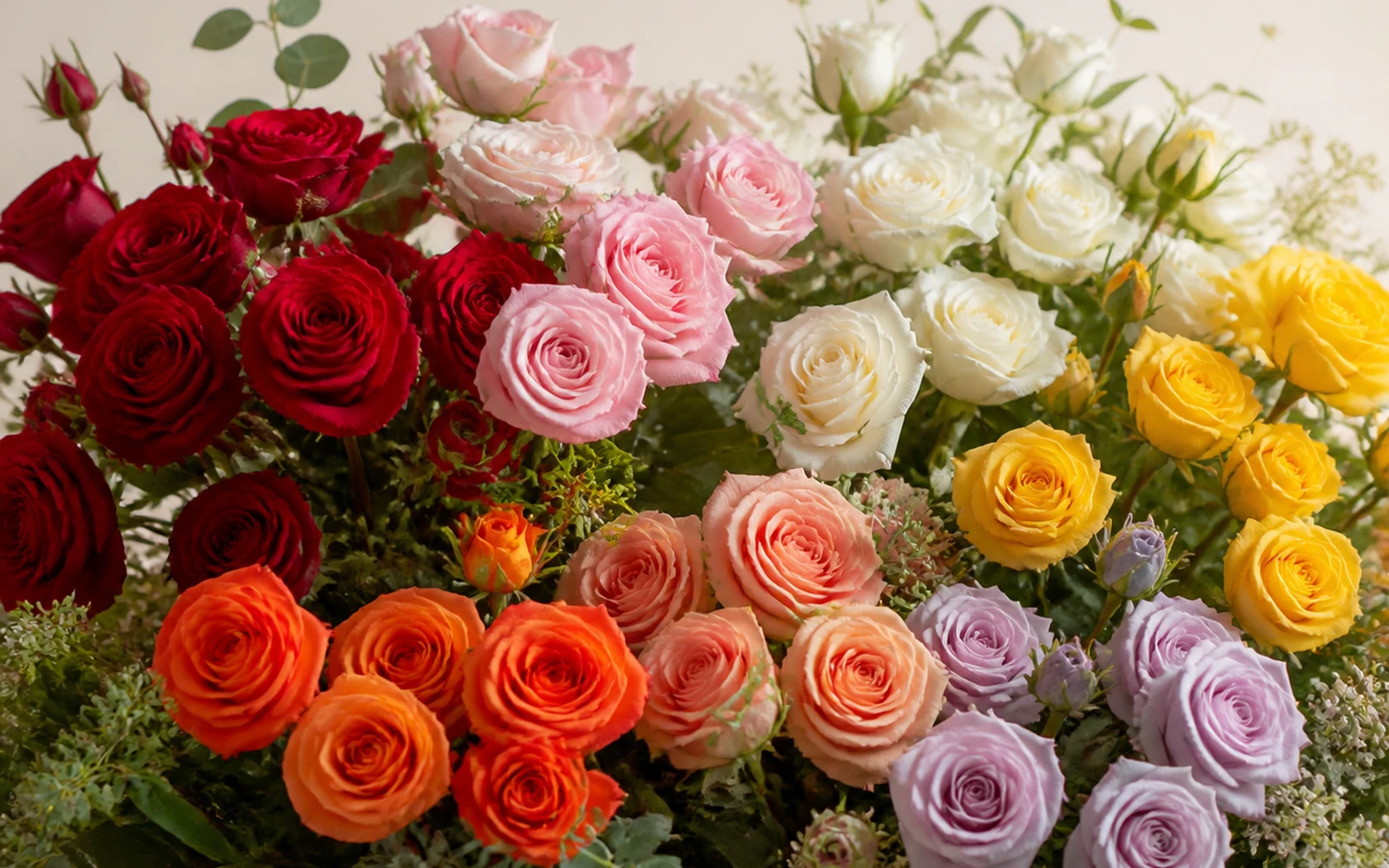
Red roses say romantic love and devotion. Pink says admiration and appreciation. White feels reverent, clear, and restrained. Yellow brings friendship and warmth. Orange carries desire and energy. Peach expresses gratitude with softness. Purple or lavender creates enchantment and drama.
That is the modern US gifting shorthand, cross-checked against the current rose-color convention guide from 1-800-Flowers. I use color to set the mood, then let the recipient and the card message make the intention unmistakable. For the structural difference between one dominant bloom, branching stems, and layered garden forms, use the standard, spray and garden rose comparison.
| Rose color | The message it commonly sends | Best when you want the bouquet to feel… |
|---|---|---|
| Red | Romantic love, desire, devotion | Direct and passionate |
| Pink | Appreciation, admiration, affection | Warm and graceful |
| White | Remembrance, reverence, clarity | Quiet and elegant |
| Yellow | Friendship, happiness, warmth | Bright and generous |
| Orange | Energy, fascination, desire | Bold and expressive |
| Peach | Gratitude, sincerity, appreciation | Soft and thoughtful |
| Purple or lavender | Enchantment, distinction, wonder | Dramatic and unusual |
Pink, blush, and ivory roses soften the message beside an all-red bouquet. I would choose this palette when affection and admiration matter more than a grand romantic declaration.
Red roses: love without ambiguity
Red is the clearest romantic rose color in contemporary gifting. It carries love, longing, desire, respect, and devotion. The deeper and more concentrated the red palette, the more formal and intense the bouquet tends to feel.
Choose red when you want the romantic intention to be obvious: an anniversary, a committed relationship, or a moment when understatement would miss the point. If the relationship is new or the recipient does not enjoy traditional romance, a different color can feel more personal.
My florist’s rule for red is simple: match its intensity. A dozen crisp red roses with a direct card feels deliberate. A lavish red arrangement with a vague note can feel like the flowers and message belong to different occasions.
Pink roses: admiration, affection, and thanks
Pink is the most flexible rose family. It can carry romantic affection, friendship, appreciation, or admiration without the force of red.
Pale blush reads tender and polished. Clear mid-pink feels cheerful and affectionate. Hot pink pushes the bouquet toward celebration and confidence. Those shade differences are modern visual cues, not laws, but they are useful when you are choosing between a gentle thank-you and a vivid birthday gift.
I reach for pink when the relationship has warmth but the message needs room: a partner, mother, sister, close friend, mentor, or host can all receive pink roses without the bouquet feeling generic.
White roses: clarity, remembrance, and restraint
White roses create visual quiet. They are commonly associated with remembrance, reverence, clarity, and restrained elegance.
The setting matters here. White can look serene, formal, modern, ceremonial, or deeply sympathetic depending on the design and note. Pair it with green for freshness, with blush for tenderness, or with a darker accent when you want contrast rather than softness.
I would never let color carry a sensitive message alone. For remembrance or sympathy, write the person’s name and say why you are thinking of the recipient. The card gives the white roses their emotional direction.
Yellow roses: friendship and bright warmth
Modern US gifting reads yellow as cheerful friendship, happiness, and warmth. It is excellent for a birthday, congratulations, a thank-you, or a lift that is affectionate without being romantic.
Old flower dictionaries sometimes gave yellow roses less welcome meanings, including jealousy. I would not revive that history in a modern gift unless the recipient specifically enjoys floriography. The Society of American Florists now lists yellow roses with friendship. A clear note—“You make every room brighter” or “I am grateful for your friendship”—supports that modern reading.
Yellow also changes quickly when mixed. Yellow and white feels fresh and open; yellow with orange becomes energetic; yellow with pink turns playful and celebratory.
Orange roses: energy, fascination, and desire
Orange roses are extroverts. Their common message is energy, fascination, enthusiasm, and desire. They suit a romance that wants heat without defaulting to red, and they work beautifully for bold celebrations.
Orange, coral, and golden roses build a warm palette with confident saturation. Choose this direction for someone who wears color, decorates decisively, or would find pale roses too polite.
Orange is sometimes described as the bridge from friendship to romance. Treat that as a useful creative interpretation, not a relationship announcement. If that shift is what you mean, put it in your own words.
Peach roses: gratitude with softness
Peach roses commonly express gratitude, sincerity, and appreciation. They have less visual sweetness than pale pink and less volume than orange, which gives them an elegant middle ground.
I like peach for a host, mentor, colleague, family member, or romantic recipient who prefers warmth without obvious red. It says, “I noticed what you did,” especially when the card names the exact gesture.
For a thank-you, peach works best when the bouquet scale matches the moment. A restrained arrangement can feel more sincere than an oversized one sent for a small kindness.
Purple and lavender roses: enchantment and distinction
Purple and lavender roses make the bouquet feel distinctive before the recipient reads the card. Their common associations include enchantment, wonder, adoration, and a dramatic romantic mood.
Lavender roses carry the entire visual idea. I would choose them for someone who loves unusual color and wants a bouquet beyond the expected red, pink, or white gift.
“Royalty” and “love at first sight” often appear in rose-meaning lists, but they are poetic interpretations rather than facts about the recipient or relationship. Purple is already expressive enough. Let the color create wonder, and use the note to say what drew you to the person.
What mixed rose colors say
A mixed bouquet does not create a secret sentence by arithmetic. It creates a mood through proportion and contrast.
- Red + pink: romantic love softened by affection and admiration.
- Pink + white: tenderness, gratitude, and quiet elegance.
- Yellow + orange: friendship pushed toward high-energy celebration.
- Peach + pink: warm thanks with a graceful, personal tone.
- Purple + white: dramatic color held inside a clean, modern frame.
- Red + white: strong contrast; the card should define whether the feeling is romantic, ceremonial, or personal.
When one color dominates, it leads the message. Accent colors adjust the mood. A mostly pink bouquet with three red roses still reads gentler than a red arrangement with a few blush stems.
Choose the rose color in three moves
First, picture the recipient’s taste. Look at the colors they wear, the room where the flowers will sit, and whether they prefer quiet neutrals or strong contrast.
Second, name your intention in plain language. Love, admiration, friendship, thanks, remembrance, or celebration is easier to design than a vague request for “something meaningful.”
Third, write the card before you order. If the sentence and color support each other, the bouquet feels composed. If they conflict, change the palette or sharpen the note.
For the broader history and symbolism of popular blooms, continue to the flower meanings guide. If roses are the right gift, browse Rosa Fiora’s rose bouquets and choose the color that looks like the recipient—not the chart you happened to read first.