Hydrangea Meaning: The Beautiful Flower with a Surprisingly Complicated Message
The same hydrangea can carry very different messages. This guide explains how color and cultural context change the interpretation.
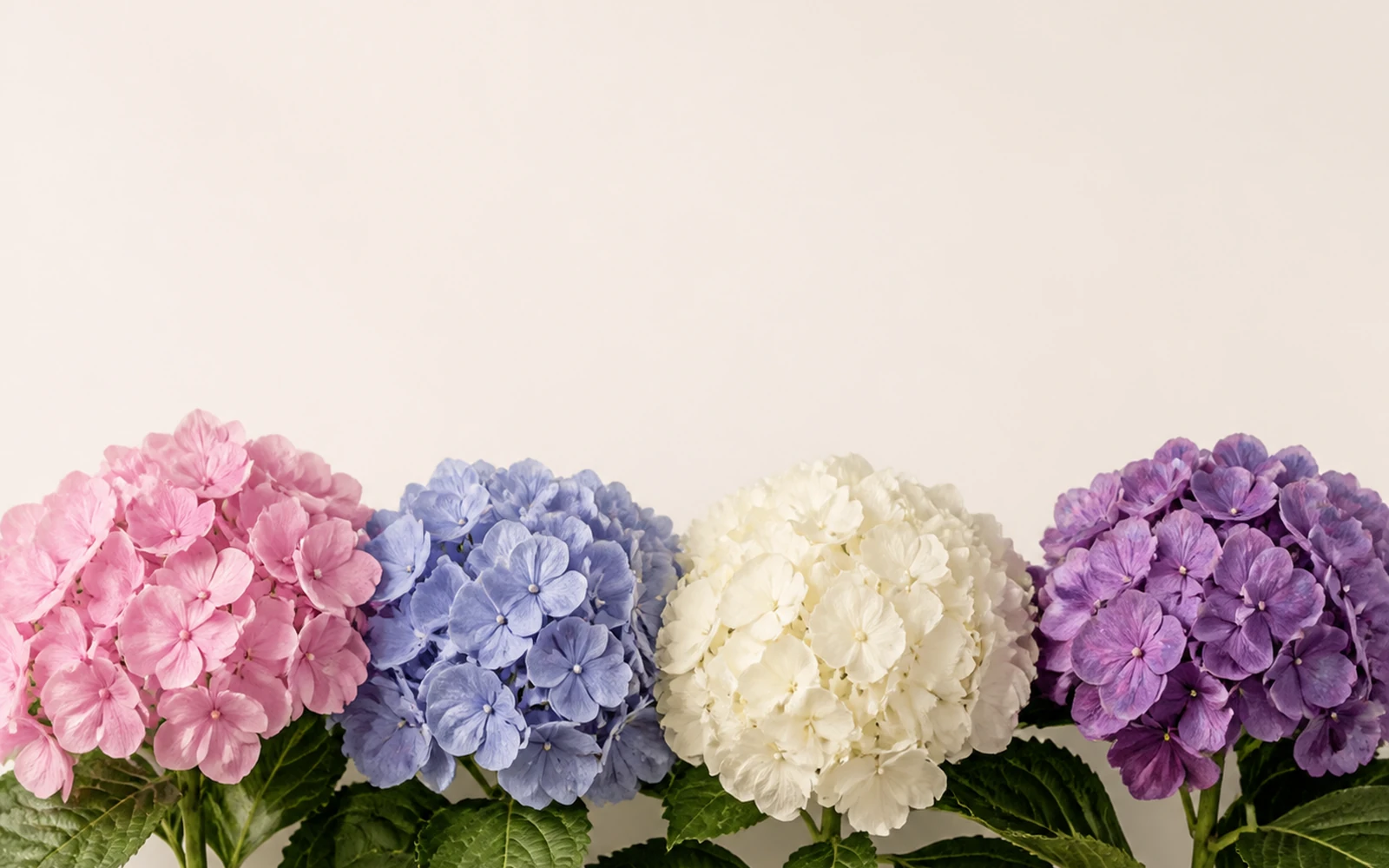
Hydrangeas can say thank you, I’m sorry, or I’m proud of you. Blue is strongest for apology or understanding, pink for affectionate thanks, purple for proud celebration, and white only when the occasion is named clearly.
Those readings come from different historical and current gifting traditions, giving the flower several distinct emotional directions.
For apology or calm thanks, I would begin with blue. Browse Rosa Fiora’s hydrangea collection and look for a palette that feels composed rather than theatrical.
The quickest way to choose
| What you want to say | Best hydrangea direction | Card language to complete it |
|---|---|---|
| Thank you for understanding | Blue, pink, or purple | “Thank you for your patience and understanding.” |
| I am sorry | Blue, with a direct and accountable note | “I’m sorry for what I did. I understand why it hurt.” |
| I am proud of you | Purple or a saturated mixed palette | “I’m proud of what you accomplished.” |
| I care about you | Pink | “Thinking of you with so much affection.” |
| Quiet respect or perseverance | White or a restrained mixed design | Name the achievement or support specifically |
Hydrangea’s many small florets gather into one broad head. To my florist’s eye, that gives even a simple arrangement generous visual volume. Scale can communicate wholehearted effort while the card handles the exact emotional message. The Society of American Florists separately lists perseverance, a useful secondary association for recognizing someone’s steady effort.
Why hydrangea can mean gratitude
One Western flower-language compilation from Iowa State University Extension lists hydrangea as “thank you for understanding.” That is a particularly useful modern message because it names a kind of gratitude that ordinary “thank you” flowers can miss: appreciation for patience, empathy, forgiveness, or steady support.
Current floral references still preserve that reading. Teleflora places vanity or boastfulness beside gratefulness for the recipient’s understanding. That contrast makes the sender’s own words especially important.
For a warm thank-you, pink hydrangea is my easiest recommendation. It feels affectionate and sincere without forcing romance.
Pale pink hydrangea with deeper blush roses gives gratitude a soft, personal focus.
A note such as “Thank you for showing up for me” is stronger than “Hydrangeas mean gratitude.” It tells the recipient why this bouquet belongs to them.
Why blue hydrangea is associated with apology
Current US floral-retail convention connects hydrangea in Japanese-associated gifting lore with heartfelt emotion, understanding, and apology. A familiar story says an emperor gave hydrangeas to express remorse, but even the retail source presents that account tentatively (ProFlowers). Treat it as modern gifting lore rather than documented court history.
Blush and ivory hydrangea suit “I’m sorry,” “thank you for understanding,” or a quiet expression of care.
Blue is calm, direct, and closely tied in current guides to gratitude, understanding, and saying sorry. Pair it with an accountable card that names what happened and opens the conversation.
A useful note has three parts:
- Say what you are sorry for.
- Recognize the effect on the other person.
- State what you will do differently.
Keep the bouquet elegant and the language plain. The more serious the apology, the less work the flower should be asked to do.
Pride has both a difficult history and a joyful use
Hydrangea’s pride association has two very different moods. Older flower-language and modern retail retellings connect white hydrangea with arrogance, vanity, or boasting. Purple, by contrast, is currently associated with pride, royalty, and gratefulness in the ProFlowers color guide.
For gifting, I translate purple’s royalty association into distinction: graduation, promotion, performance, launch, or a milestone reached through perseverance.
A palette of purple, lavender, blush, and ivory, carried by hydrangea and roses, creates the boldest direction here. Choose it when pride should feel celebratory and impossible to miss.
Write the achievement into the note: “You worked for this, and I am so proud of you.” That sentence leaves no room for the older boastfulness reading to take over.
When color is secondary
Recipient taste leads the choice. Choose a palette they would welcome, then write the gratitude, apology, affection, or pride plainly.
Hydrangea color also changes character with its surroundings. Powder blue feels quieter beside pale wood and linen, while saturated purple carries more weight against deep stone, dark furniture, or a strongly colored room.
For the broader symbolism framework, see our guide to flower meanings. If the arrangement includes peonies, use the separate peony meaning guide.
Make an apology delivery easy to receive
A basket arrives ready to place; a wrapped hydrangea cloud creates a more personal handoff and moves into water soon after arrival. For an apology, choose a welcomed delivery place where the gesture can open a conversation comfortably.
After delivery, share our guide to reviving cut hydrangeas if the stems begin to wilt.
Hydrangea meaning FAQ
What does a blue hydrangea mean?
Blue hydrangea most often carries gratitude, understanding, or apology. I pair it with a direct card so the recipient knows whether the message is “thank you,” “I understand,” or “I’m sorry.”
What does a pink hydrangea mean?
Pink hydrangea feels affectionate, warm, and grateful. It suits a heartfelt thank-you, a close friend, a family celebration, or romance with a softer mood.
Are hydrangeas appropriate for an apology?
Yes. Blue hydrangeas are especially fitting when the card names the apology clearly, recognizes the hurt, and opens the door to a real conversation.
Hydrangea’s contradictions are what make the flower useful: soft pink can thank, blue can reconcile, and saturated purple can celebrate.