Tulip Meaning by Color: What Your Bouquet Says Before You Write the Card
Tulip colors carry different romantic and celebratory associations. Use them as thoughtful guidance rather than rigid gifting rules.
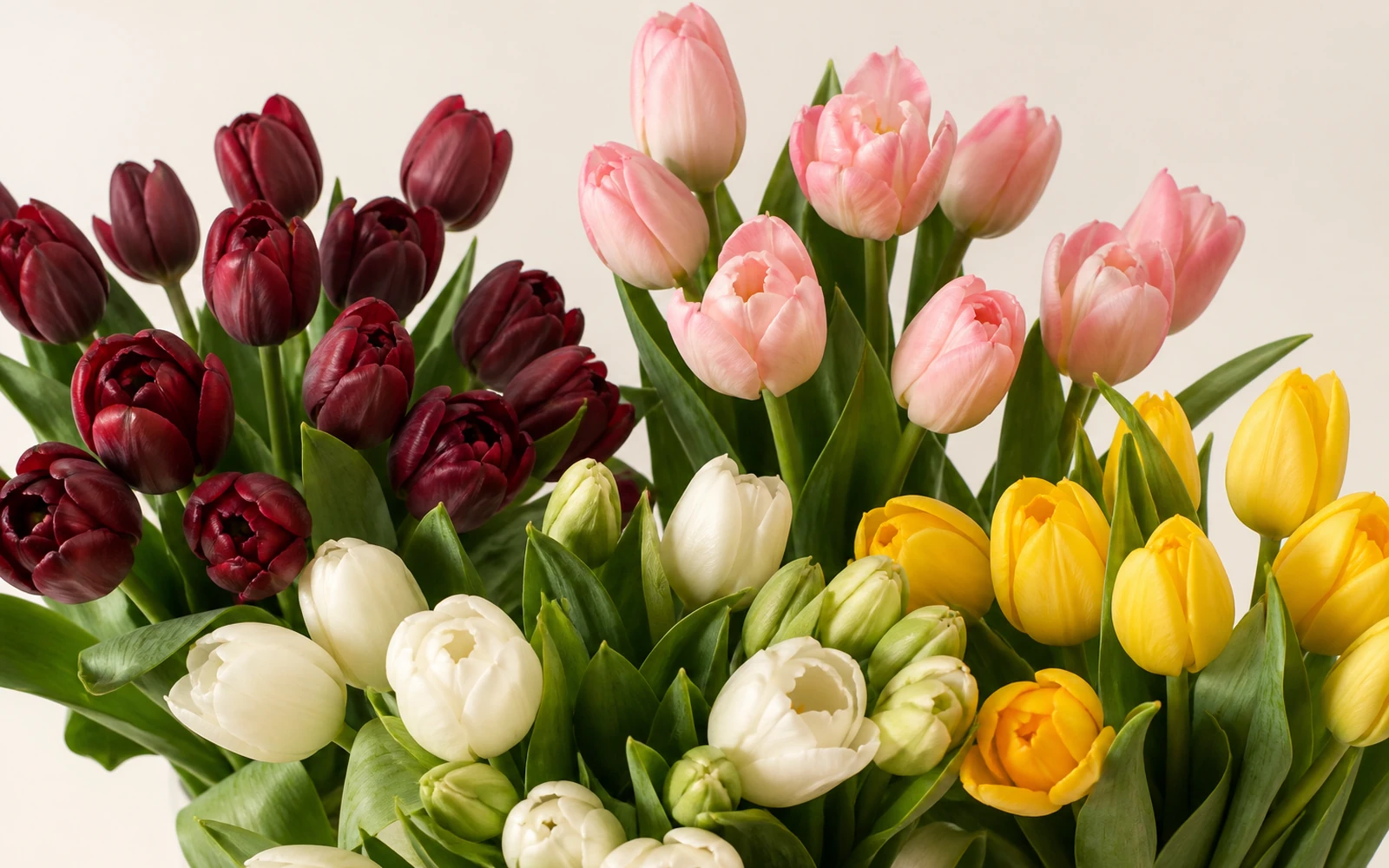
Red tulips declare love. Pink offers care. White supports forgiveness. Yellow brings sunny cheer, while purple adds distinction. Choose the color for the relationship and the recipient’s taste, then write the message you actually intend.
These inherited and current gifting traditions give the bouquet an opening language; your card makes the message unmistakable.
If the message is explicit romance, red is the confident choice. Browse Rosa Fiora’s tulip collection to compare the palette before you write the note.
Red and burgundy tulips make the clearest declaration here: elegant, direct, and unmistakably romantic.
Tulip meanings by color
| Tulip color | Traditional or current meaning | Best recipient intent |
|---|---|---|
| Red | Declaration of love | Partner, anniversary, romantic milestone |
| Pink | Caring | Friend, relative, partner, new parent, supportive gift |
| White | Forgiveness | Thoughtful apology, reconciliation, quiet fresh start |
| Yellow | Cheerful thoughts or “sunshine in your smile” | Birthday, congratulations, encouragement, just because |
| Purple | Royalty | Distinction, admiration, dramatic celebration |
Red tulips: say the love plainly
The Society of American Florists lists red tulip as a “declaration of love.” Iowa State University Extension gives the same color the wording “Believe me, declaration of love.” The message is unusually consistent: red tulips are for romance that should be understood immediately.
I would choose red when the relationship is established or when the sender genuinely intends a romantic declaration. It is ideal for an anniversary, Valentine’s Day, a romantic birthday, or an ordinary day when “I love you” is the whole point.
The card can stay short:
- “I love you—and I would choose you again.”
- “Still completely taken with you.”
- “For the person who makes every day better.”
For a deeper comparison of romantic palettes, our rose color meanings guide explains when another flower and color may fit the relationship better.
Pink tulips: warm care without pressure
The Society of American Florists pairs pink tulips with caring. That makes pink the most flexible choice in this guide: affectionate, celebratory, or softly romantic.
I would use pink for:
- a close friend who needs encouragement;
- a parent, sibling, or relative;
- a new baby or new parent;
- a birthday with a soft, joyful mood;
- a partner when tenderness matters more than drama.
Write “Thinking of you,” “I’m so happy for you,” or “Sending you so much care.” The relationship supplies the nuance that the color alone cannot.
Pink tulips in a clean presentation suit affection, encouragement, or a soft romantic gesture.
White tulips: forgiveness needs words
White tulips are associated with forgiveness in both the Society of American Florists compilation and Teleflora’s current tulip guide.
A white-and-green tulip palette gives that message a quiet clarity. For an apology, begin the card with “I am sorry for…” and name what will change. The same clean palette also suits a fresh start or an understated celebration when the card names the occasion.
Yellow tulips: choose the cheerful modern reading
Yellow has the most interesting conflict. Iowa State’s compilation gives yellow tulips the sunny compliment “There’s sunshine in your smile.” Teleflora associates them with cheerful thoughts. The Society of American Florists preserves a different entry: “hopelessly in love.”
For a modern gift, I would choose the cheerful reading. Yellow tulips are bright, energetic, and easy to give for birthdays, congratulations, encouragement, or a just-because lift. If romance is the goal, red communicates it far more cleanly.
A bright yellow tulip design turns the yellow-and-green palette into a full celebratory statement. It is the natural choice for someone whose presence brings energy to a room.
Try one of these card lines:
- “You bring so much light to the people around you.”
- “A bright bouquet for a brilliant achievement.”
- “Just sending a little sunshine your way.”
Purple tulips: distinction and dramatic elegance
Purple tulips are associated with royalty in current US floral convention from both the Society of American Florists and Teleflora. I translate that into distinction: admiration for someone singular, accomplished, stylish, or drawn to dramatic color.
Purple is an excellent direction for a milestone, performance, promotion, or sophisticated birthday. Its royal association becomes a more unusual, commanding expression of admiration.
If purple suits the recipient, check the current tulip collection for an available design. When another color is the better choice, put the admiration or distinction directly in the card.
Read a mixed tulip bouquet by its dominant color
A mostly yellow bouquet will feel cheerful even with a few white stems; red and white will feel more formal and romantic. Do not assign a separate word to every stem. Let the dominant palette lead, then use the card for any meaning that must be unmistakable.
Tulips continue to lengthen and turn toward light in the vase, so their line becomes looser after delivery. Choose them when that visible movement feels welcome, not when the goal is a rigid, fixed outline.
Our flower meanings guide explains why these associations multiply over time. For a romantic milestone, choose by relationship and occasion with the separate anniversary flowers guide.
Keep wrapped tulips moving toward water
Wrapped tulips make a strong hand-to-hand gift, but the recipient needs a vase and water soon after arrival. For a Miami hotel, office, condominium, or gated property, plan the receiving point before sending them. A contained arrangement may be the easier choice when the bouquet could wait with security or reception.
Red, pink, white, yellow, and purple tulips each give you a distinct opening line. Pick the color that fits the relationship, then make the card more specific than the tradition.