Just-Because Flowers: Why the Best Surprise Has No Occasion at All
The strongest surprise gifts often have no occasion. Learn how to choose the right mood, scale, timing, and message for an unprompted bouquet.
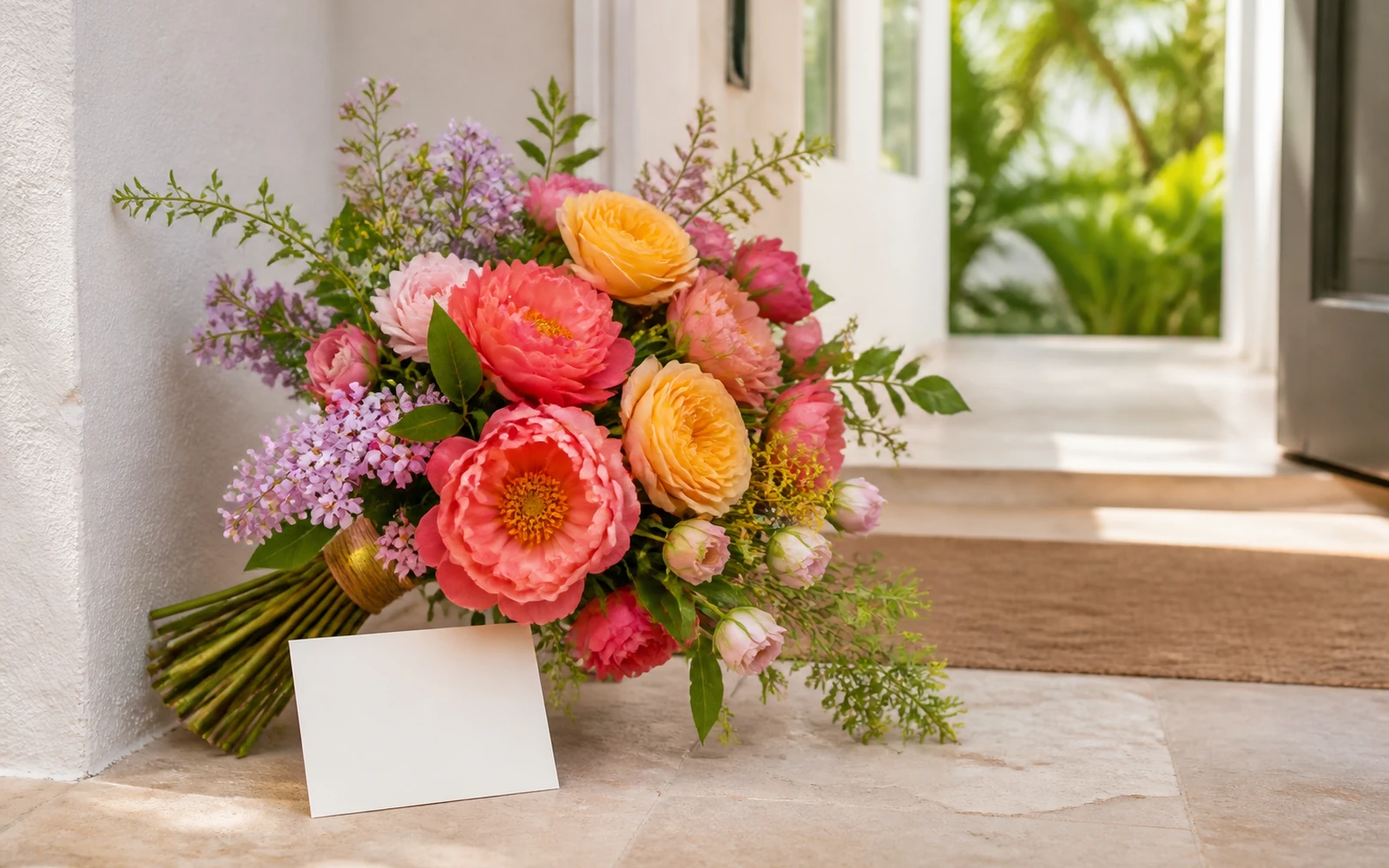
A just-because bouquet feels right when it carries one detail you have genuinely noticed, a scale that fits the relationship, a format that suits the recipient’s day, and a card that explains the thought plainly. The flowers can arrive on an ordinary Tuesday. Their reason is already enough: this color reminded me of you; you said you loved these; I wanted to brighten your week.
Use this four-part shortcut:
| Decision | What to choose | A simple example |
|---|---|---|
| Observed detail | one real preference, memory, color, or flower | the pink hydrangeas she points out on walks |
| Mood | quiet, bright, playful, romantic, or composed | peach and white for warm, easy energy |
| Handoff | wrapped for carrying and arranging; vase for immediate placement | a vase for a busy workday |
| Message | one sentence naming the thought | “The color reminded me of your kitchen.” |
Start with Rosa Fiora’s current Just Because collection and compare designs through those four choices. Ignore the occasion labels for a moment; look for the detail that belongs to the person.
A pink hydrangea-and-rose direction keeps the gesture visually focused. It works when that cloudlike form or soft blush color is the detail you recognized.
A peach-and-white mix carries more lift and movement. Choose this direction for someone who gravitates toward warm color, loose garden texture, or a brighter room.
An airy ivory rose-and-stock hatbox makes the receiving experience part of the choice. It arrives already composed and suits a day when the recipient can place the flowers on a clear surface and keep moving.
Build the bouquet around one small observation
The strongest unprompted gift rarely needs a grand backstory. It needs specificity.
Look for a detail the recipient chooses repeatedly:
- a color that appears in clothes, art, tableware, or a room;
- a flower they name when they see it;
- a preference for clean lines or loose garden texture;
- a tiny ritual, such as buying tulips for the kitchen;
- a shared reference that can be explained in one sentence.
I would use one of those clues as the center of the design. A person who fills a home with cream ceramics may appreciate white flowers with long green lines. Someone who wears saturated orange may connect more quickly with coral roses and apricot tones. A friend who grows hydrangeas may enjoy that familiar bloom more than a bouquet chosen from a symbolism chart.
The Society of American Florists gathers traditional flower meanings while recognizing the role of personal association in a modern gift. That is the useful part of symbolism here: a remembered flower can carry meaning because it belongs to your shared vocabulary.
For a deeper recipient-style method, use How to Choose Flowers for Her. For this gift, keep the brief beautifully small: one observed detail, clearly expressed.
Match the volume to the relationship
A just-because gift should feel like the relationship already feels. Scale, color, and language create that emotional volume together. When the flowers are tied to a specific act of help, use the relationship-and-scale framework in our thank-you flowers guide instead.
For a partner
A known favorite can carry romance without leaning on an anniversary or Valentine’s Day. Repeat the flower from an early date, the color from a shared room, or the loose garden style they save constantly. Let the card connect the detail to today.
For a friend
Choose a color or flower with a clear friendly association: the yellow they wear, the pink they grow, the white-and-green style of their apartment. A direct card keeps the warmth easy to read.
For a family member
Use a domestic clue—their garden, kitchen, favorite vase, or usual palette. A contained arrangement can be useful when you know where it will sit; a wrapped bouquet adds the pleasure of arranging when that is something they enjoy.
For a colleague or someone you know more lightly
Keep the gesture edited. A compact footprint, composed palette, and straightforward card can show appreciation or encouragement without giving the flowers a larger role than the relationship carries.
Price never needs to speak for you. The observed detail does that work far better.
Choose the first hour, then choose the format
Picture what happens when the flowers arrive.
A wrapped bouquet creates a small ritual. The recipient carries it, unwraps it, chooses a vase, adds water, and adjusts the stems. That experience can be lovely for someone at home who enjoys arranging flowers.
A vase arrangement creates a quicker landing. The recipient needs a stable surface and enough room for the flowers, while the composition itself is already in place. That can suit an office, a hotel stay, a packed afternoon, or a home where you know the display spot.
The guide to flower gift formats compares those handoff choices in detail. For a spontaneous gift, I ask one practical question: Which format will feel like pleasure in the recipient’s actual next hour?
Scale follows the same logic. A compact bouquet can slip naturally into the day. A broad arrangement becomes part of the room. Choose the visual footprint with the receiving space in mind, especially for a desk, restaurant table, bedside surface, or smaller condo.
Pick an ordinary moment with room to receive it
Spontaneity still benefits from thoughtful timing. Choose a day when the recipient is likely to be reachable and has a practical place for the flowers.
Useful moments include:
- the middle of a demanding week;
- the day after a project ends;
- a quiet weekend at home;
- the beginning of a new routine;
- a regular day connected to a private memory.
The surprise becomes more personal when the timing has a small reason. “You finished the first week” carries more texture than a random dramatic entrance. “I remembered our walk past the pink hydrangeas” gives the day its own logic.
For Miami hotels, condominiums, offices, and other managed properties, prepare the full recipient name, property name, unit or room, phone number, and relevant concierge or security details. Staff may direct the flowers to a designated receiving point. Review the current Rosa Fiora Delivery Policy while planning the handoff.
If the property setup or bouquet direction needs a conversation, share the date, delivery area, and style with Rosa Fiora before choosing. That early help path is especially useful when a large arrangement, restaurant handoff, hotel stay, or unusual access plan is involved.
Write the card like a human being
The card should answer “Why today?” in a sentence or two. It can be warm, affectionate, funny, or romantic. Clarity keeps the gesture relaxed.
Try one of these structures:
- Name the detail: “You mentioned how much you love pink hydrangeas. I saw these and thought of you.”
- Name the ordinary day: “No occasion—I just wanted to add some color to your week.”
- Name the connection: “The peach and white reminded me of your kitchen. Thinking of you today.”
- Name the tiny intention: “A small bright interruption for an ordinary Tuesday.”
Then stop. The flowers and one honest sentence can hold the whole gesture. Skip a question that asks the recipient to reassure you, explain their reaction, or respond immediately.
My just-because rule
I would rather send a focused bouquet with one unmistakably personal clue than a larger design with a generic message. Choose the detail first. Let the mood support it. Fit the format to the day. Write the reason in your own voice.
That is how an ordinary day becomes the occasion.