Thank-You Flowers: The Fine Line Between Thoughtful and Too Much
The same bouquet can feel warm in one situation and excessive in another. Match the gift to the relationship and the size of the gesture.
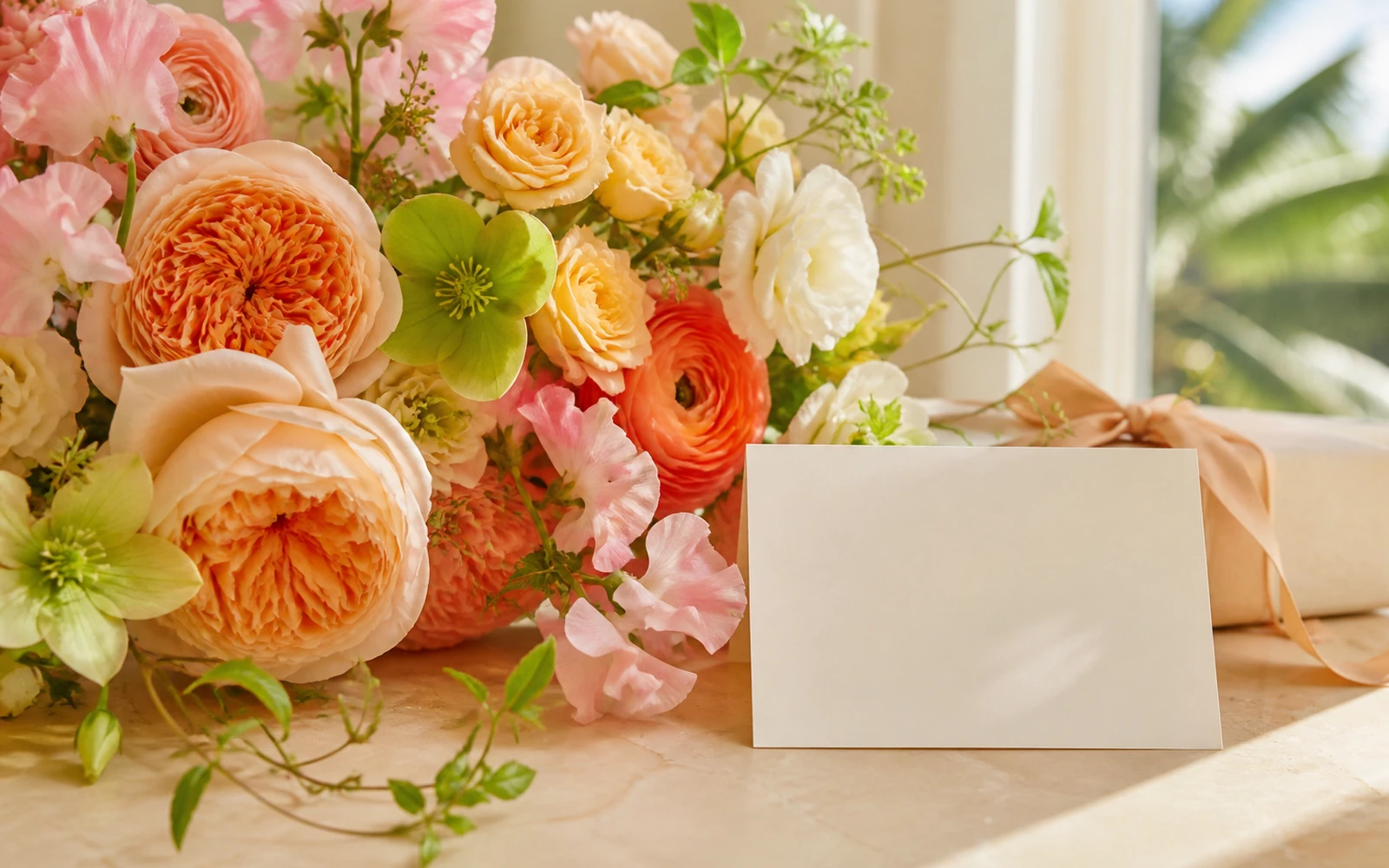
The right thank-you flowers match the relationship, the size of the kindness, and the place where the gift will be received. Send a compact, polished arrangement for everyday help or a professional thank-you; choose more color and presence for a close friend or a significant act of support; bring a host something contained and easy to set down. Then let the card name exactly what you appreciate.
Here is the quick calibration:
| You are thanking… | Best scale and tone | Format direction | Card focus |
|---|---|---|---|
| A host | modest, polished, warm | contained vase or basket | the invitation and hospitality |
| A friend | personal, expressive | favorite colors or a style tied to them | the specific help or quality you value |
| A client | restrained, clear, professional | compact or medium finished arrangement | trust, time, or collaboration |
| A colleague | desk-conscious or suitable for a shared space | finished vase or low arrangement | their contribution or support |
| Someone who helped in an everyday way | light, direct, cheerful | small or medium arrangement | the exact kindness |
If you already know the relationship and color direction, browse Rosa Fiora bouquets now. Choose by emotional volume before flower name: a clear thank-you should feel generous without turning a simple kindness into a ceremony.
A dense dome of lavender roses in smoky lilac wrapping creates a contained footprint and polished silhouette for a colleague, client, mentor, or design-minded friend.
The gesture sets the volume
I think of appreciation in three volumes, and none of them is a price category.
A light thank-you acknowledges a ride, a useful introduction, a small favor, or help with one practical task. Keep the flowers concise. A finished arrangement with one clear color idea says, “I noticed what you did,” without making the moment feel formal.
A personal thank-you fits repeated support, thoughtful hospitality, care over time, or a friend who stepped in when you needed them. This is where favorite colors, garden texture, or an unusual silhouette can carry more personality. The arrangement can be fuller because the relationship carries more emotional history.
A significant thank-you marks major generosity, a long project, sustained guidance, or support that changed the shape of your week or season. More scale can be appropriate, but specificity still matters more than size. A huge arrangement with a vague card feels less personal than a beautifully chosen design with one truthful sentence.
The best test is simple: if the flowers are larger than the story you can honestly write on the card, reduce the scale and sharpen the message.
Five relationships, five different thank-yous
For a host: arrive with something finished
A host is greeting people, watching the room, and managing the flow of the gathering. Choose flowers that can be placed on a clear surface in their finished format. A basket or vase makes the gift immediately legible and keeps your thank-you separate from the host’s table plan.
Peach tulips with small blue accents in a pale woven basket create an orderly dome for a dinner invitation, weekend stay, or gathering with a warm springlike mood.
Write: “Thank you for such a lovely evening. Your table, your welcome, and the time together meant so much.”
Send the flowers after the gathering when bringing them along would complicate your arrival. The message still carries the moment clearly.
For a friend: use evidence from the friendship
A friend gives you more room for personality. Pull one detail from what you know: the yellow they always wear, the blue-and-white ceramics in their kitchen, their love of wild garden shapes, or their preference for clean modern lines.
Name the act without turning the card into an account of favors. Try: “Thank you for showing up with exactly the help I needed. I’m so grateful for you.” The first sentence belongs to this moment; the second belongs to the friendship.
For an unprompted gift that celebrates the person rather than a specific favor, our guide to just-because flowers takes a different path. Thank-you flowers should keep the appreciation visible.
For a client: let restraint look intentional
Professional flowers need a clear reason and a comfortable scale. I favor a finished arrangement that can sit on a reception counter, office credenza, or conference-room surface without dominating the room.
Keep the palette aligned with what you know. Crisp white and green can read quietly; a controlled purple or blue composition can feel creative; warm yellow can express energy. Avoid romantic presentation and intimate language.
Write: “Thank you for your trust and thoughtful collaboration. I appreciated the clarity and care you brought to the project.” Sign with your full name and company when context will help the recipient identify the sender immediately.
For a colleague: recognize the contribution
A workplace thank-you should name the contribution rather than praise someone in sweeping personal terms. A colleague may have caught an error, covered a meeting, shared expertise, or helped a team reach a deadline. Put that detail in the card.
Try: “Thank you for stepping in on the presentation and making the handoff so smooth. Your judgment made a real difference.”
Choose a scale for the receiving space. A private office gives you more flexibility; a shared desk calls for a tighter footprint; a team thank-you can go to a shared area with every sender named clearly.
For recurring client, team, or workplace gifting, contact Rosa Fiora with the relationship, recipient count, setting, dates, and tone you want to carry.
For everyday help: keep it bright and direct
Everyday kindness deserves to be noticed. It simply needs a lighter touch. A neighbor who collected a package, a teacher who made extra time, or a friend who handled one important errand can receive a warm arrangement with a one-sentence card.
Yellow, peach, blush, blue, and ivory tulips with tweedia create a bright basket direction for an open, cheerful thank-you.
Write: “Thank you for helping with [specific thing]. Your kindness made my day easier.” Specificity gives a modest arrangement all the meaning it needs.
Scale is also physical
Emotional volume is only half the choice. The arrangement has to fit its destination.
- A narrow vase suits a desk, side table, reception counter, or compact entry.
- A low basket works on a coffee table, dining surface, or broad console.
- A tall architectural arrangement needs clear overhead and side space.
- A hand-tied bouquet suits someone who enjoys arranging flowers and has a vessel ready.
- A finished arrangement is the better default when the gift should begin with immediate placement and enjoyment.
For a fuller comparison of presentation choices, use the guide to flower gift formats. Then return to the thank-you question: which format fits this recipient’s actual room and this gesture’s actual volume?
Make the card do what the bouquet cannot
Flowers can show attention through color, shape, and scale. The card supplies the reason.
Use this three-line formula:
- Name the help: “Thank you for…”
- Name its effect: “It gave me…” or “It made…”
- Close with the relationship: “I appreciate your friendship,” “With gratitude,” or “Thank you from all of us.”
A host card might mention the evening. A friend card can name the moment they showed up. A client card can acknowledge trust. A colleague card should identify the contribution. An everyday note can stay to one sincere sentence.
Leave out scorekeeping—how much you spent, how hard it was to choose, or why the gesture earns future help. Appreciation feels strongest when it is complete in itself.
For a Miami delivery, plan the receiving place
Thank-you flowers often go to workplaces, hotels, and condominiums, so the address alone is only the beginning of the plan. Match the arrangement to the route it will take through the building.
For a Miami office, share the company, floor or suite, recipient’s mobile number, reception hours, and the name that staff will recognize. For a condominium, add the building and unit plus concierge, security, gate, or call-box details. For a hotel, use the reservation name and coordinate the receiving day with the guest.
A compact vase is easier to place at a reception counter than a sweeping basket. A broad host arrangement is best sent where the recipient has a home surface ready for it. Choose the format after you understand the handoff, then review Rosa Fiora’s current Delivery Policy for the live receiving details.
When the recipient, setting, or professional tone needs a more tailored recommendation, send Rosa Fiora the relationship, occasion, palette, and delivery setting. A short brief is enough to begin the design conversation.
Let the thank-you feel proportionate—and unmistakably personal
Thoughtful thank-you flowers frame the kindness. Choose a scale that fits the gesture, a format that fits the room, and a card that names what mattered. That combination can make even a compact arrangement feel complete.