Wedding Flowers by Season: Plan Color, Texture and Flexibility
Translate each season into a practical wedding flower brief built around palette, texture, sourcing, venue conditions, and flexible visual priorities.
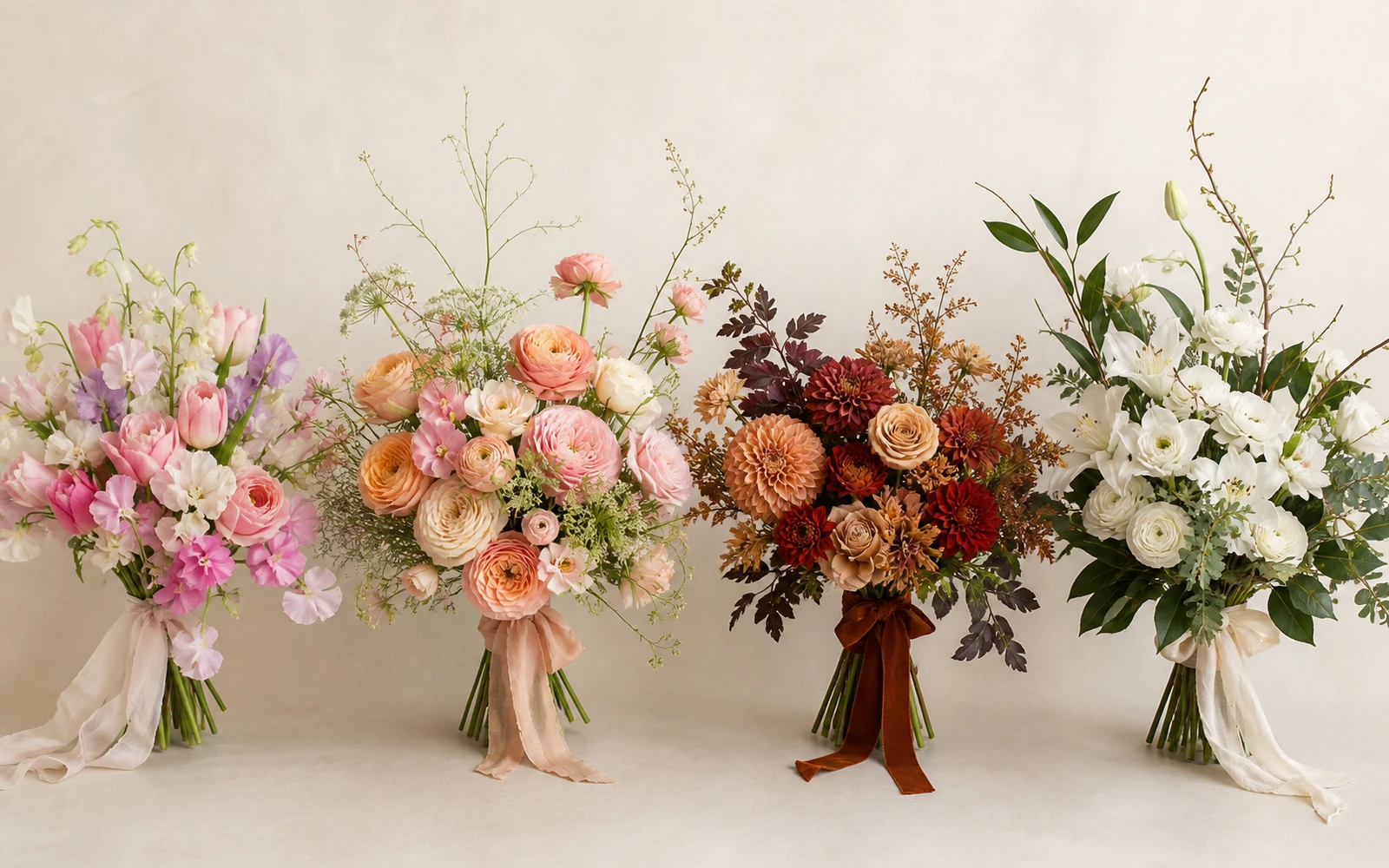
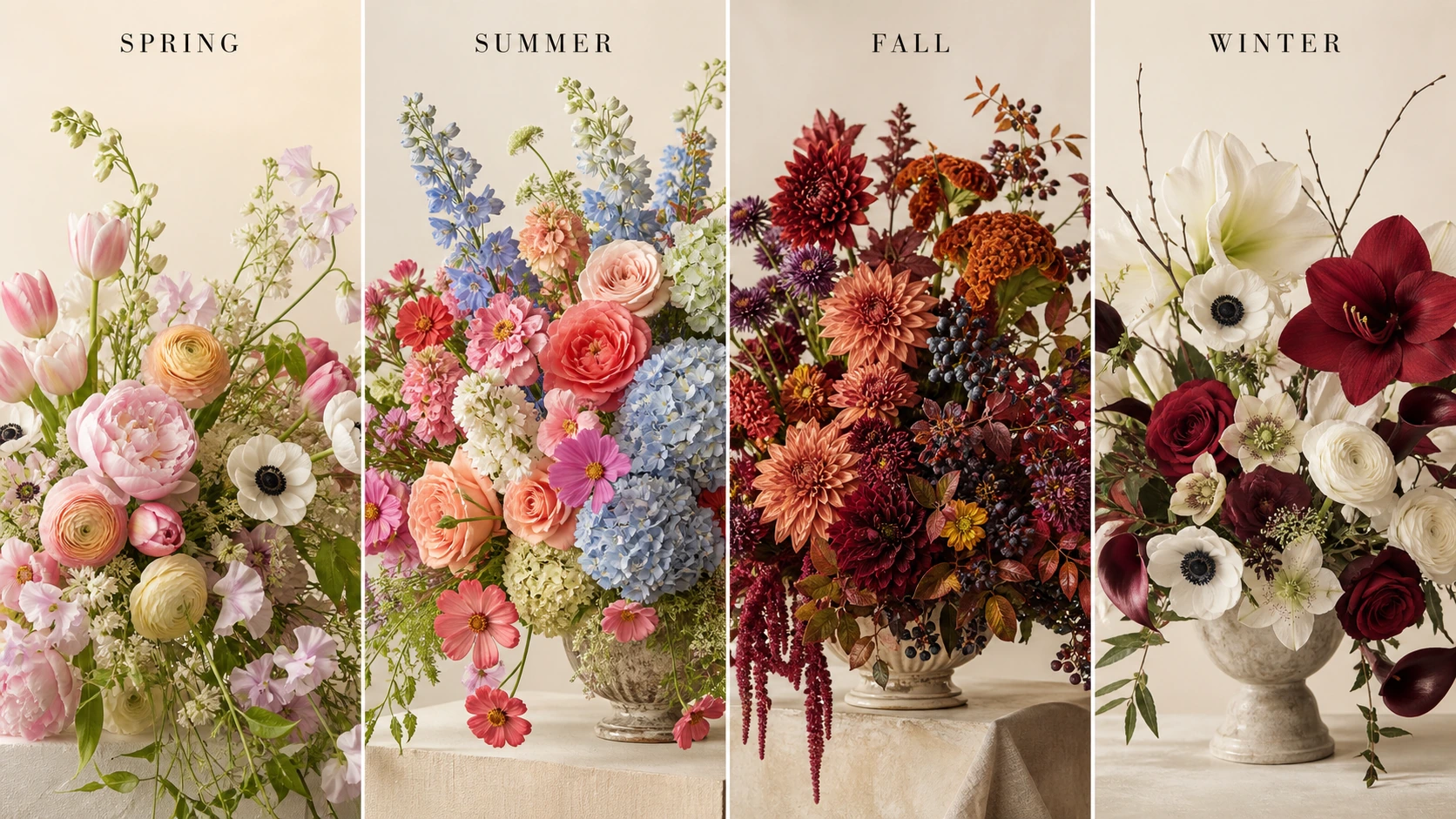
Wedding flowers by season work best when the season becomes a complete visual brief. Spring can feel translucent, fresh, and fluttering; summer can be open, bright, and garden-led; fall can build depth through berry color and tactile texture; winter can become sculptural through clear line, contrast, and negative space. Choose the atmosphere first, then connect flower preferences to sourcing, venue, transport, and the qualities you want the florist to preserve.
| Season | Common starting points | Visual direction | Main planning conversation |
|---|---|---|---|
| Spring | tulips, ranunculus, peonies, anemones, sweet peas | light, layered, fresh green | opening stage and delicate movement |
| Summer | roses, hydrangeas, delphinium, stock, zinnias, cosmos | bright, open, garden-led | holding, transport, and outdoor transitions |
| Fall | dahlias, chrysanthemums, celosia, amaranthus, asters | deep color and tactile contrast | warm/cool balance and room materials |
| Winter | amaryllis, anemones, ranunculus, hellebore, roses, calla | sculptural line and contrast | silhouette, room scale, and negative space |
These are design starting points. Confirm current sourcing with your florist for the wedding date, color, quantity, grade, and opening stage your plan needs.
I build a seasonal wedding brief in three layers:
- Appearance: the palette, shape, texture, movement, and atmosphere guests will see.
- Supply: the flower preferences a florist will explore for the date, color, quantity, and grade the design needs.
- Environmental plan: the format, route, holding, setup, and placement choices shaped around the venue and wedding-day sequence.
That approach gives you more creative control than a long list of mandatory stems. It also keeps the conversation positive: every preferred flower carries a reason, and that reason opens useful design options.
If you already have a date and venue, start a seasonal wedding-flower conversation with Rosa Fiora. Send the indoor and outdoor sequence, attire image, two palette references, three texture words, and the flower you notice first. The current Rosa Fiora Wedding collection can help you identify visible qualities before the consultation.
A loose coral-and-gold bouquet shows how open flower faces, rising green-yellow detail, and exposed stems can create warm-season energy without becoming dense.
A plum bouquet with smooth calla, round accents, layered petals, and a strong asymmetric line shows how a deeper palette can still feel modern and full of movement.
Use the cards as vocabulary. Name the color distribution, line, texture, and silhouette you want to carry into your own wedding.
Spring studio: light, layered, and newly green
Spring wedding flowers often begin with the feeling of growth. I look for fresh green, petal pink, butter yellow, pale blue, lilac, and ivory, then give those colors room to breathe.
Tulips bring a clean curved line. Ranunculus and peonies suggest soft layers. Anemones add a graphic face. Sweet peas create fluttering detail, while lilac can introduce branching texture and fragrance. Those names are starting points for a florist’s date-specific sourcing conversation; the design brief is the relationship among them.
Build the palette like morning light
Choose one soft base, one fresh color, and one small point of contrast. Ivory, blush, and green can become more distinctive with a fine thread of blue. Butter yellow can warm pale pink. A black-centered anemone can add a crisp focal note inside an otherwise delicate composition.
Give texture a rhythm
Spring feels alive when scale changes. Place one generous layered flower beside smaller fluttering faces, a clean stem line, and a little branching movement. That contrast gives the bouquet dimension and helps ceremony flowers feel airy rather than thin.
Write the spring brief
- Palette: petal-soft color with fresh green and one precise accent.
- Texture: layered focal flowers, small fluttering details, and branching movement.
- Supply conversation: preferred spring flowers, desired colors, quantity, opening stage, and the visual substitutes that keep the brief intact.
- Venue conversation: natural light, fragrance preference, aisle width, ceremony backdrop, and reception room scale.
- Flexible priority: preserve delicacy, curved line, and the sensation of new growth.
A spring wedding can feel seasonal even when the final recipe changes. The season lives in the lightness, spacing, color relationships, and movement.
Summer studio: color with room to move
Summer invites a broader range of visual energy. Coral, citrus, blue, saturated pink, white, and green can feel joyful and direct. Roses and hydrangeas create mass; delphinium and stock add vertical line; zinnias, cosmos, dahlias, and open garden flowers bring visible faces and movement.
The design decision is how much volume belongs in each space. A bridal bouquet may carry concentrated color, while the ceremony uses taller lines that read from the back row. Reception flowers can repeat the palette in smaller rhythms across the tables.
Balance mass and air
Hydrangea-like volume creates a cloud. Tall flowers create lift. Open faces pull the color toward the viewer. Fine stems and visible gaps keep the whole composition moving. I would choose two of those effects as leaders and let the others support them.
Plan the day route with the design
Map preparation, photographs, ceremony, cocktail hour, and reception in order. Add transport, holding location, setup access, indoor and outdoor transitions, and the time each floral moment enters the room. The florist can then connect bouquet format, mechanics, placement, and production sequence to the real wedding route.
Write the summer brief
- Palette: bright garden color, coastal white and blue, or a concentrated tonal family.
- Texture: open faces, rounded mass, rising line, and a little airy movement.
- Supply conversation: the flower categories that create the desired scale and the colors that carry the design.
- Venue conversation: transport, holding, access, setup order, outdoor moments, and room transitions.
- Flexible priority: preserve bright energy and the balance between fullness and breathing room.
For a specifically coastal event, continue with the beach wedding flower guide, which focuses on wind, sun, salt air, setup, and the route to the ceremony. This seasonal guide stays with the visual brief and production conversation.
Fall studio: depth beyond orange
Fall wedding flowers can move far beyond a single harvest palette. Rust and ocher are beautiful, but so are muted rose, aubergine, copper, wine, cocoa, olive, and smoky cream. A cool plum accent can make warm tones feel more dimensional.
Dahlias offer strong geometry. Chrysanthemums can create detailed mass. Celosia and amaranthus introduce velvet, plume, and trailing texture. Asters bring smaller starry faces, while roses can soften the transition between saturated and neutral colors.
Let materials carry the season
Fall is especially strong when floral texture speaks to the room. Wood, stone, linen, candlelight, dark glass, metallic detail, and fruit-toned color can create a layered atmosphere. The flowers can echo one material and contrast another. A smooth calla beside a velvet-like plume feels richer because the surfaces differ.
Control the warm-to-cool balance
Choose a dominant temperature. A warm design might lead with copper and rust, then use plum as depth. A cooler design might lead with wine and aubergine, then add ocher as a glow. This keeps the palette intentional across attire, linens, stationery, and flowers.
Write the fall brief
- Palette: berry, copper, ocher, plum, muted rose, or a controlled mix of warm and cool tones.
- Texture: geometric focal flowers, plumes, seed-head detail, trailing line, and rich surfaces.
- Supply conversation: priority colors and forms, with flower names attached to the feature they contribute.
- Venue conversation: room finishes, linen color, evening light, candles, table density, and ceremony-to-reception transitions.
- Flexible priority: preserve depth, tactile contrast, and the chosen temperature balance.
Fall becomes memorable through material and color relationships. Orange can lead, whisper, or step aside completely.
Winter studio: silhouette, contrast, and glow
Winter wedding flowers gain presence through edited choices. Ivory and green can feel architectural when the line is clean. Deep red or aubergine can create a concentrated focal point. Silver, glass, pearl, or candlelight can add reflection without asking the flowers to carry every decorative detail.
Amaryllis provides a strong stem and trumpet form. Anemones and ranunculus bring crisp faces and layered texture. Narcissus and hellebore suggest winter-garden character. Roses and calla can support a clear tonal palette and a more sculptural silhouette.
Design the negative space
A winter bouquet can look generous with fewer competing shapes when each line has purpose. Repeated calla create a long gesture. A concentrated round cluster creates calm. One branching element can widen a ceremony design while leaving the architecture visible.
Use contrast at the scale of the room
A small dark accent may read clearly in the bouquet and disappear across a ballroom. Repeat it where guests will actually see it: ribbon, candle color, menu detail, or a measured floral rhythm. For an intimate room, a quieter tonal design may carry enough presence on its own.
Write the winter brief
- Palette: ivory and green, deep red, aubergine, or a tonal neutral direction with reflective detail.
- Texture: sculptural stems, concentrated clusters, glossy foliage, layered faces, and deliberate open space.
- Supply conversation: preferred winter character, stem line, focal scale, and color depth.
- Venue conversation: entrance route, interior transitions, candle plan, reflective surfaces, room scale, and placement timing.
- Flexible priority: preserve a strong silhouette, controlled contrast, and intentional negative space.
In Miami, winter is a design language rather than a snowy landscape. A white-and-green ceremony can feel cool and crisp through line and spacing, while a jewel-toned reception can use depth and glow without borrowing a northern holiday theme.
Miami seasonality starts with the route
South Florida has its own climate context, and the National Weather Service Miami climate page publishes local records and 1991–2020 normals for Miami and nearby sites. For wedding planning, the useful move is to connect the venue sequence to the floral design.
Share these details during consultation:
- preparation location and personal-flower handoff;
- photography locations and indoor/outdoor movement;
- loading area, security, concierge, elevator, and placement contacts;
- ceremony exposure and the transition into cocktail hour;
- reception-room access, table readiness, and candle or rental coordination;
- any planned transfer of floral pieces between spaces;
- the intended holding location before each design is placed.
This information changes the format and production plan. A bouquet held for portraits has a different route from a ceremony installation assembled at the venue. A hotel ballroom, garden terrace, private home, and beachfront property each create a different sequence of access, placement, and guest movement.
Turn a favorite flower into a flexible priority
Start with the flower name, then finish the sentence with the reason you love it.
- “Peonies matter because I love generous layered petals.”
- “Tulips matter because I love a clean curved line.”
- “Hydrangea matters because I love cloudlike volume.”
- “Dahlias matter because I love a strong geometric face.”
- “Sweet peas matter because I love fluttering movement.”
- “Calla matters because I love a smooth sculptural gesture.”
The reason becomes the substitution brief. A florist can search for the right date, grade, and color while preserving the visual feature that made the flower important in the first place.
For the broader botanical and commercial calendar, read what flowers are in season. For every floral location and handoff across the celebration, use the wedding flower checklist. Together, those guides provide the calendar and the piece list; this one gives you the seasonal creative direction.
Bring one chosen season, five brief lines, and three ranked visual priorities into the consultation. That is enough to begin shaping flowers that belong to the date, the room, and the atmosphere you want guests to remember.