What Flowers Are in Season? The Month-by-Month Truth About Availability
A month-by-month guide to flower seasonality, realistic availability, and choosing by color or texture when a preferred bloom cannot be sourced.
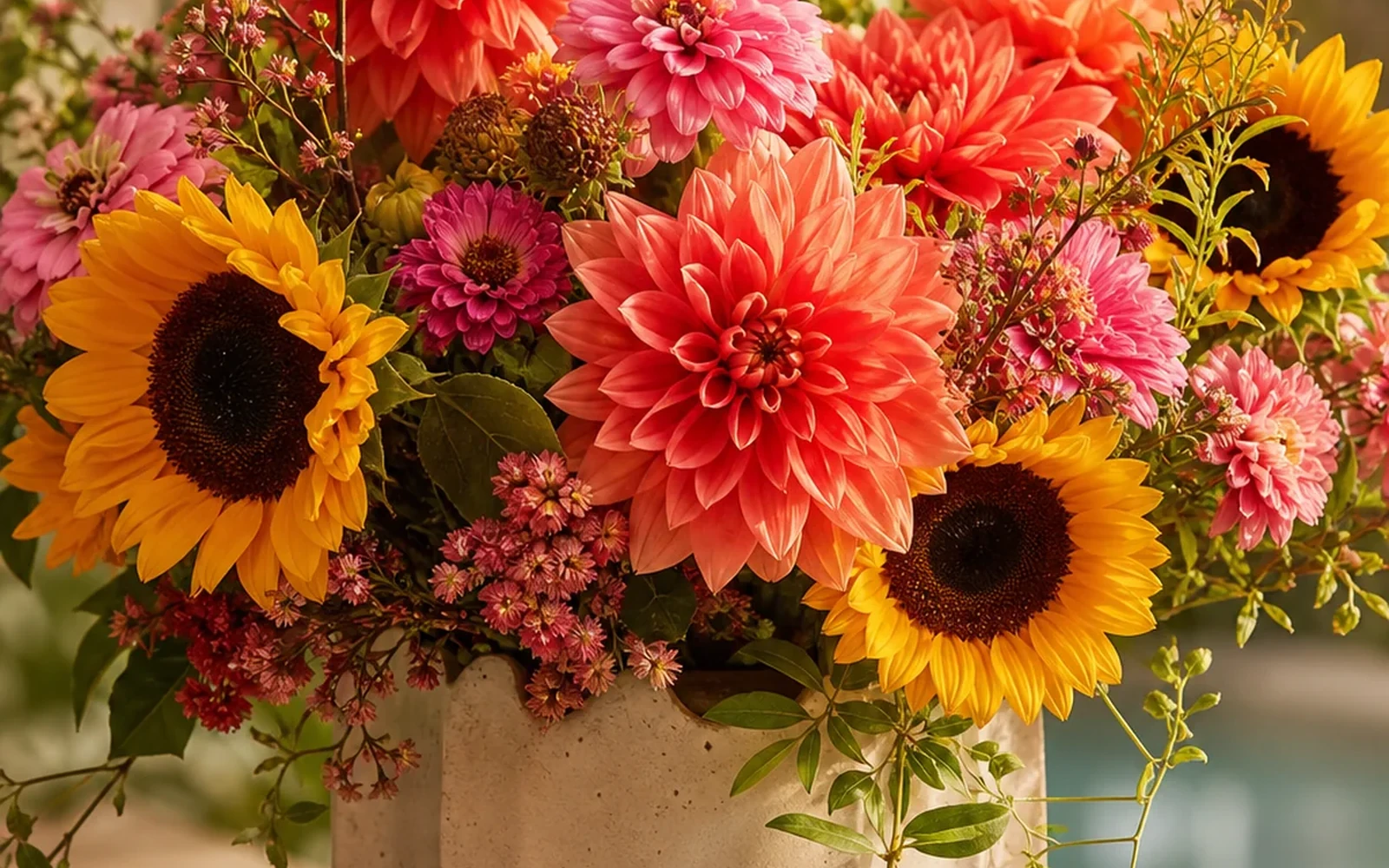
Flowers commonly associated with winter include hellebore, amaryllis, narcissus, anemone, ranunculus, and tulip. Spring brings tulips, lilac, sweet peas, iris, and peonies; summer is known for roses, hydrangeas, delphinium, sunflowers, zinnias, cosmos, and dahlias; fall favors dahlias, asters, chrysanthemums, celosia, amaranthus, and textural branches. Use that calendar for inspiration, then let the florist build the best version for your date.
When someone asks me what flowers are in season, I separate three answers:
- Botanical season: when a plant normally flowers outdoors in a particular climate.
- Commercial cut-flower availability: when the trade may be able to source suitable stems through field crops, protected growing, imports, and overlapping production regions.
- Live inventory: what a florist can actually confirm for your date, design, color, quantity, and delivery plan.
A flower can be blooming in a garden and still be unavailable in the grade or quantity a design needs. It can also be out of season outdoors near you and present in the commercial market. Live inventory is the final test.
If you are choosing a gift now, browse the current bouquet collection by color and silhouette first, then name the flowers you especially love in the order notes.
Flowers by month: a practical planning guide
This calendar translates broad temperate Northern Hemisphere bloom windows into a florist’s planning view. Miami readers can use it as a design calendar while the florist works with the stems moving through the current flower market. The NC State Extension Plant Toolbox documents seasonal bloom periods by plant, and the Missouri Botanical Garden Plant Finder offers a second horticultural reference. Cultivar, climate, and growing conditions shape the exact timing.
| Month | Broad temperate bloom windows | Design character | Substitution brief |
|---|---|---|---|
| January | hellebore, amaryllis, narcissus | sculptural winter forms, white, green, and jewel tones | “winter contrast with one strong flower shape” |
| February | anemone, ranunculus, tulip, narcissus | layered petals beside clean bulb-flower lines | “romantic layers with one crisp graphic face” |
| March | tulip, daffodil or narcissus, hyacinth, anemone | unmistakable spring color and movement | “fresh spring bulbs with controlled fragrance” |
| April | tulip, narcissus, lilac, sweet pea | airy branches, small faces, and soft clustered texture | “pastel spring movement with a loose silhouette” |
| May | peony, lilac, sweet pea, iris | lush late-spring petals and fragrance | “generous blush-and-cream flowers; fragrance confirmed separately” |
| June | peony, rose, delphinium, hydrangea | garden fullness, vertical line, and rounded mass | “full garden texture with one tall line and one cloudlike focal shape” |
| July | dahlia, sunflower, zinnia, cosmos | open faces, bright color, and light movement | “high-summer color with graphic blooms and airy detail” |
| August | dahlia, zinnia, celosia, sunflower | saturated color and tactile texture | “one dramatic form with warm, confident color” |
| September | dahlia, aster, chrysanthemum, celosia | late-summer flowers turning toward berry and copper | “transitional garden color without forcing autumn orange” |
| October | chrysanthemum, dahlia, cosmos, amaranthus | seed-head, plume, trailing, and burnished textures | “autumn texture in wine, copper, ocher, and muted rose” |
| November | chrysanthemum, aster, rose, berries and branches | stronger line and late-autumn structure | “deep red and cream with branch movement” |
| December | amaryllis, narcissus, hellebore, evergreen accents | festive verticals and clear winter silhouettes | “winter white and deep red with evergreen texture” |
Use each shortlist as a visual brief: name the flower you love, then describe the color, shape, or movement you want the bouquet to preserve.
Peach tulips rising above a woven base with small blue accents show one clear spring direction.
Stock establishes the vertical line, while hydrangea provides rounded mass and orchids, ranunculus, and roses add distinct flower faces.
How the flower trade extends the natural calendar
A garden calendar answers a biological question. A florist answers a supply-and-design question.
Commercial cut flowers may come from field production, greenhouses or other protected systems, and more than one country or growing region. The USDA APHIS plant-import guidance confirms that cut flowers and greenery enter the United States as regulated plant commodities. The US trade therefore draws from a much wider calendar than one city’s outdoor bloom season.
The final selection then depends on:
- whether the desired species and cultivar are being cut;
- color, stem length, head size, and opening stage;
- the quantity and consistency required;
- crop or weather disruption;
- inspection, transport, and arrival condition;
- holiday demand;
- whether the stems are strong enough for the intended design and route.
That is why “I saw peonies online in February” and “I need twenty matching pale-pink peonies for this date” are completely different requests.
The better way to request seasonal flowers
Give the florist a hierarchy rather than a locked shopping list.
1. Name the flower you love
Say, “I would love peonies,” “I am drawn to tulips,” or “Hydrangea is the texture I notice first.” A clear preference is useful.
If meaning is part of the choice, compare the romantic and celebratory associations in our peony meaning guide and the color-led messages in our tulip meaning guide.
2. Explain why you love it
Is it the round shape, layered petals, clean line, fragrance, garden looseness, or association with a memory? The reason reveals the best substitute.
3. Lock the palette and mood
“Blush and cream, quiet and romantic” is more durable than five mandatory flower names. So is “citrus color, airy movement, joyful rather than formal.”
4. Set the true nonnegotiables
A nonnegotiable might be no strong fragrance, no orange, a vase arrangement rather than wrapped stems, or a compact design for a small table. Those constraints can matter more than seasonality.
For a wedding, use the wedding flower checklist to connect those priorities to personal flowers, ceremony spaces, reception tables, timing, and responsibilities. The average wedding flower cost guide then helps place the floral priorities inside the wider budget.
5. Ask for live confirmation
Ask the useful question directly: What can you confidently source and design for this specific date? The answer turns a broad seasonal idea into a clear order plan.
A mixed garden composition can preserve blush-and-white softness, airy line, and layered texture across several flower categories.
How substitution can protect the design
A thoughtful substitution preserves the part of the design that matters.
| If you wanted… | Protect this quality | Possible direction to discuss |
|---|---|---|
| peony | generous layered focal bloom | garden rose or another full, many-petaled focal flower |
| lilac | clustered, airy, fragrant spring texture | another branching or clustered flower in the same palette; fragrance confirmed separately |
| sweet pea | delicate flutter and fine stems | another small, airy flower with light movement |
| hydrangea | broad cloudlike volume | grouped smaller flowers or another rounded mass, if appropriate to the design |
| dahlia | geometric focal form | another strong round or radiating focal flower in the intended color |
| tulip | clean line and graceful movement | another linear stem or a simpler flower face with similar visual restraint |
The florist balances these design directions with scale, stem behavior, fragrance, durability, and the rest of the composition.
A note for Miami and South Florida
In Miami, use the month chart as a style calendar. South Florida cultivation follows its own climate, while the florist market also brings in stems from other growing regions.
For a Miami gift, I use seasonality to choose the visual language—spring softness, summer brightness, autumn texture, winter contrast—then select the strongest stems for the date.
The simplest answer
Use the month list for inspiration. Use commercial availability to understand why the list can stretch. Use live inventory to decide what can actually be ordered.
The strongest brief sounds like this: “I love May peonies, but the real priorities are blush-and-cream color, full layered petals, and a loose garden shape. Please confirm what works for my date.” That gives the florist something specific to protect and enough room to make the bouquet beautiful.