Valentine’s Day Flowers: What to Send When Red Roses Feel Too Obvious
Red roses are iconic, but they are not the only romantic choice. Find flowers and palettes that better match the person and relationship.
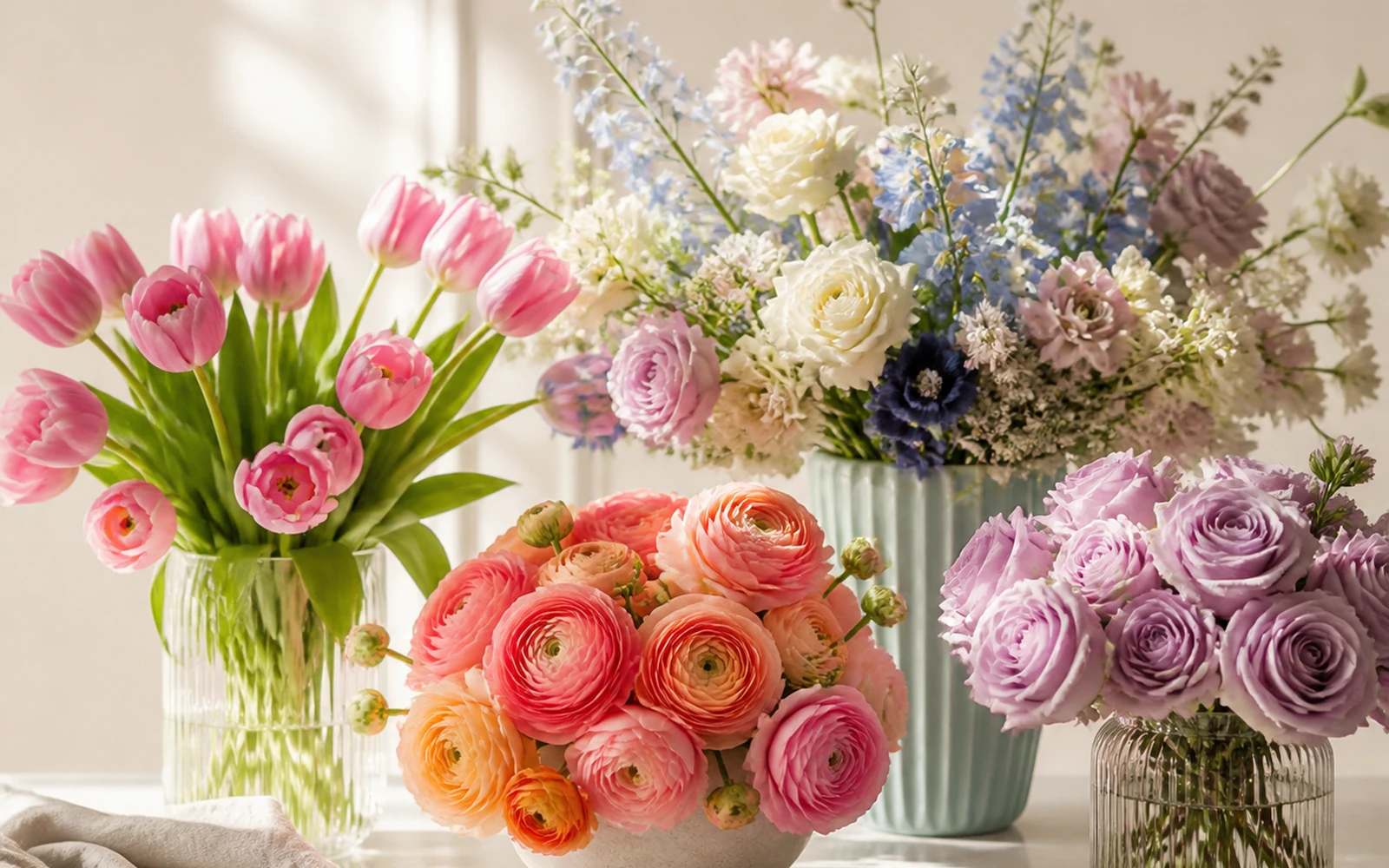
When red roses feel too obvious, choose Valentine’s Day flowers through one honest message and one detail you know about the recipient. Five strong alternatives are bright tulips for direct warmth, layered ranunculus for soft detail, an airy vase arrangement for design-led taste, a monochrome bouquet in their favorite color, or a garden-style mix connected to a shared memory. The flower matters; the accuracy of the choice matters more.
Here is the fast match:
| What you want to say | A useful flower direction | Relationship context |
|---|---|---|
| “I love your energy” | vivid tulips with clean green rhythm | new or established romance when bright color fits them |
| “I notice the details” | layered ranunculus with small contrasting accents | a recipient who loves softness, texture, or watercolor color |
| “I chose this for your eye” | airy, asymmetrical flowers in a distinctive vase | someone drawn to art, interiors, or sculptural objects |
| “This color is completely you” | one flower family in a favorite saturated hue | any relationship stage with a clear personal color cue |
| “This brings me back to us” | a loose garden mix tied to a place or memory | an established relationship with real shared references |
Compare those directions in the current Love collection rather than beginning with a price ladder. The three examples below move well beyond an all-red rose dome.
A radial bouquet of vivid pink tulips feels bright, affectionate, and visually direct. Choose this path when the recipient already wears, grows, or keeps lively pink nearby.
Blush ranunculus among pink and ivory hydrangea and roses creates a quieter watercolor effect. Its layered flower faces suit someone who notices texture and close color shifts.
A pure cloud of powder-blue hydrangeas gives romance a calm, expressive look instead of a conventional red silhouette.
Start with the sentence before the flower
Write the first draft of the card before choosing the bouquet. The sentence reveals the real job of the gift.
“I had such a good time with you” asks for a different visual volume than “I love the life we have built.” “You make ordinary days fun” can support playful color. “This reminded me of our trip” needs the palette or flower that carries the memory. “I am grateful for your friendship” should stay unmistakably warm and friendly.
This order protects you from borrowing a bouquet’s symbolism and asking it to do all the emotional work. The Society of American Florists explains that flower meanings come from varied sources. Use those associations as inspiration, then let the recipient’s own memories and taste lead.
A useful Valentine’s card has three parts:
- one direct feeling;
- one concrete detail about the person or relationship;
- one closing that matches the closeness you already share.
Try these as starting points:
- “I love how quickly you turn an ordinary plan into a good story. Happy Valentine’s Day.”
- “You make our home feel like the place I want to return to. I love you.”
- “That blue you always choose made me think of you immediately.”
- “I’m so glad our friendship includes laughing at exactly the wrong moment. Happy Valentine’s Day.”
- “Still choosing you, still curious about you, still grateful for us.”
The card gives the arrangement its relationship context. The flowers make that message visible.
Match the bouquet to the stage without playing a role
For a new connection, keep the gesture specific
A newer romance can feel warm, confident, and personal. Choose one recognizable clue: a color they wore, a flower they mentioned, a room detail, or a style visible in the objects they choose. An edited bouquet built around that clue says, “I paid attention.”
Tulips can bring clean shape and energy; ranunculus can bring layered detail; a compact monochrome bouquet can make one color feel intentional. Let the card name what you genuinely enjoy at the level of closeness you already share.
For an established relationship, use shared visual history
Longer relationships give you better material than a generic romance list. Revisit a wedding palette, a garden you both love, the flowers from a meaningful dinner, the color of a memorable room, or the bloom they buy for themselves.
If red roses are part of your history, keep them. If a completely different flower holds the stronger reference, follow that. Our guide to choosing flowers around her real style offers a broader color-and-silhouette framework; here, the Valentine’s decision is narrower: connect that observed style to what the relationship should say today.
For friendship or chosen family, make the warmth clear
Valentine’s Day can celebrate affection beyond romance. Use vivid color, playful contrast, a favorite flower, or a small design that fits the person’s space. Then make the card unmistakable: name the friendship, gratitude, or delight you are celebrating.
The recipient-specific cue and the written message create a clear friendship context together.
For long-distance plans, design the receiving moment
When distance separates you from the handoff, format carries more responsibility. A vase arrangement arrives composed and needs a stable surface. A wrapped bouquet makes the reveal feel generous but asks the recipient to find water and a vessel.
Choose around their actual day: home, office, hotel, condo, dinner, travel, or a schedule that moves between several places. The best design is the one that can enter that day gracefully.
Use color to replace shorthand with personality
Red can stay in the palette without controlling it. Burgundy with blush feels deeper and more tonal. Red with apricot adds warmth. One crimson accent inside a field of pink or ivory changes the rhythm completely.
Or move away from red:
- Pink and green feels fresh and energetic when the shapes stay clean.
- Blue and blush feels quiet and painterly.
- Purple feels decisive for someone who already claims it as their color.
- Apricot and cream brings warmth without the familiar Valentine’s contrast.
- Blue, white, and orange creates an expressive palette for a recipient who enjoys unexpected combinations.
If tulips are the direction, the color-by-color context in our tulip meaning guide can supply ideas for the card. Personal associations still make the final call.
Plan Valentine’s delivery around the handoff
Choose the delivery day and format by where the recipient will be and what they can receive easily. Confirm the full name, address, unit or room, phone number, and property process before ordering. If the order is for today, use the same-day flower delivery guide alongside the live Same-Day collection. If dinner or travel follows, decide who will carry the bouquet and where it will have water.
For current delivery guidance, read Rosa Fiora’s Delivery Policy. If you are shopping on the day itself, use the live Same-Day collection to see the options currently presented there. That page keeps changing product and service details in the right place: close to the order.
The Miami detail that changes the surprise
Condominiums, hotels, restaurants, and offices can route flowers through concierge, reception, security, or another receiving point. Put the reservation or unit name, property details, and reachable recipient information into the order. For a restaurant, choose a design that fits the table or plan the handoff for after the meal. For a hotel, coordinate around the property’s receiving process and the recipient’s schedule.
Move flowers from the handoff to shade or air conditioning promptly, especially when plans include an outdoor walk, waterfront stop, or time in a parked car. A beautiful surprise deserves a clear next destination.
Keep the recognizable choice when it is genuinely theirs
Choose red roses deliberately rather than on autopilot. If the recipient loves classic red roses, that accuracy makes them personal. If they light up around tulips, lavender, porcelain, wild garden texture, or one electric color, follow the stronger clue.
Valentine’s flowers feel romantic when they make the recipient visible inside the choice.