Types of Wedding Bouquets: 11 Styles and Silhouettes Compared
Compare Biedermeier, cascade, composite, hand-tied, hoop, nosegay, oversized, pageant, pomander, posy, and round wedding bouquets.
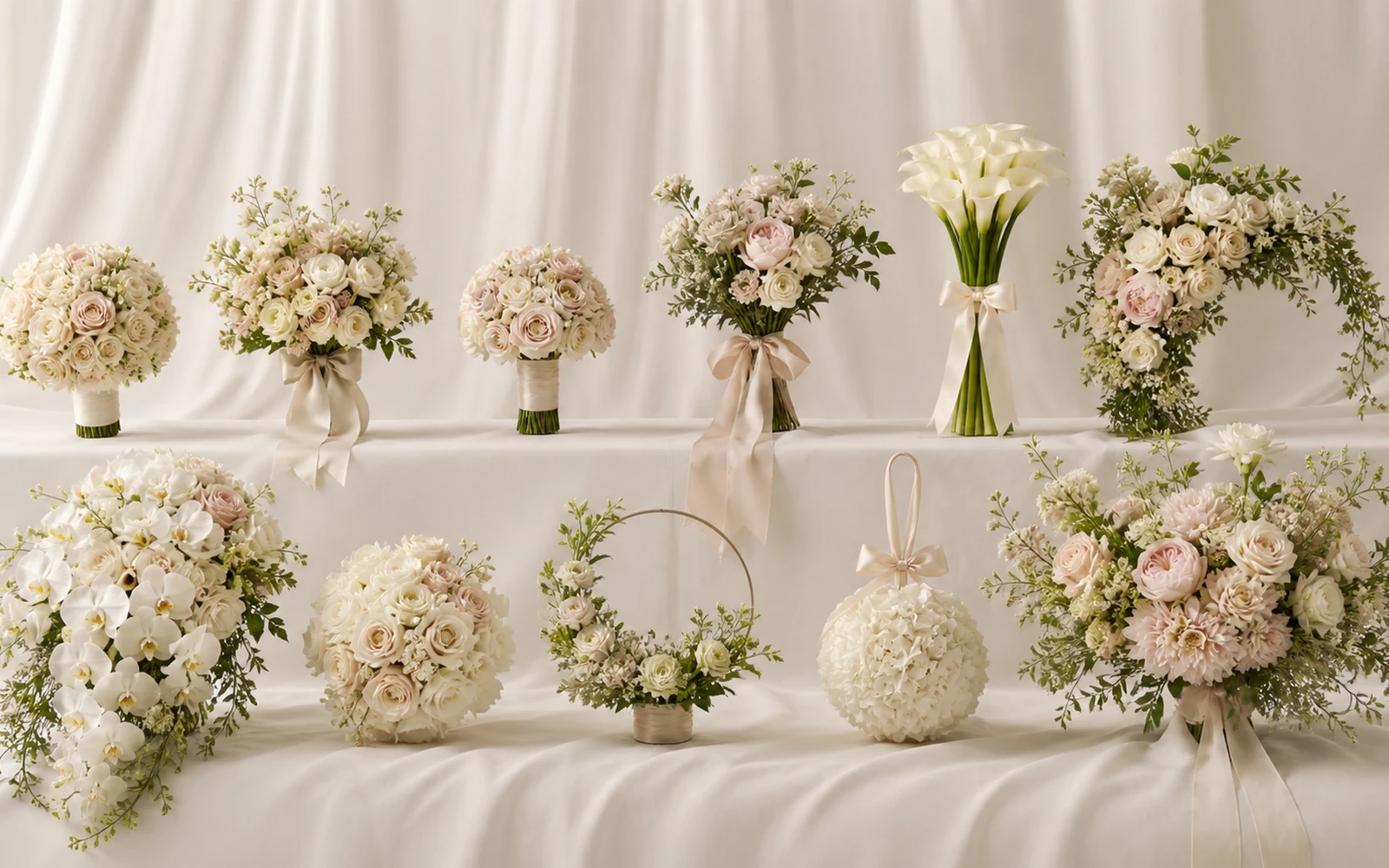
The 11 wedding bouquet styles compared here are Biedermeier, cascade, composite, hand-tied, hoop, nosegay, oversized, pageant, pomander, posy, and round. The Knot’s current guide to wedding bouquet styles, shapes, and sizes presents all eleven. I compare them through the same seven practical questions: silhouette, proportion, movement, attire interaction, carrying experience, venue, and photography.
These are bouquet types and styles, not one rigid botanical taxonomy. Some are defined mainly by outline, some by construction, and some by the way they are carried. The useful question is how each finished bouquet behaves against attire, space, movement, and the camera. Hand-tied appears here as a bridal construction and carried style; recipient setup and everyday gift presentation remain in the flower gift formats guide.
| # | Wedding bouquet style | The quickest visual read |
|---|---|---|
| 1 | Biedermeier | concentric rings of color or flower variety |
| 2 | Cascade | rounded top flowing into a long taper |
| 3 | Composite | one oversized flower-face illusion |
| 4 | Hand-tied | gathered stems tied at one binding point |
| 5 | Hoop | flowers attached to an open circular frame |
| 6 | Nosegay | compact, tightly finished cluster |
| 7 | Oversized | broad freeform mass extending beyond the center |
| 8 | Pageant | long-stemmed bouquet cradled along one arm |
| 9 | Pomander | complete floral sphere carried by a loop |
| 10 | Posy | small, loosely gathered one-hand bouquet |
| 11 | Round | centered, symmetrical floral dome |
You can compare current Rosa Fiora Wedding bouquets as three clear style lessons. A compact round cluster keeps the floral mass centered and close.
An elongated cascade pulls the eye down through the front of the look and creates visible motion below the hands.
A long calla bouquet shows the one-arm linear gesture associated with a pageant presentation.
If one of those directions is close to your wedding, start a bouquet consultation with the date, venue, attire image, and the style you want to explore. Those four details make a stronger opening brief than a folder of unrelated photographs.
The 11 wedding bouquet styles, compared by the same criteria
Wedding vocabulary overlaps, so the first line of each section identifies what defines the type: arrangement pattern, silhouette, structure, or carry. The seven repeated criteria then show how that choice behaves in the full wedding.
1. Biedermeier
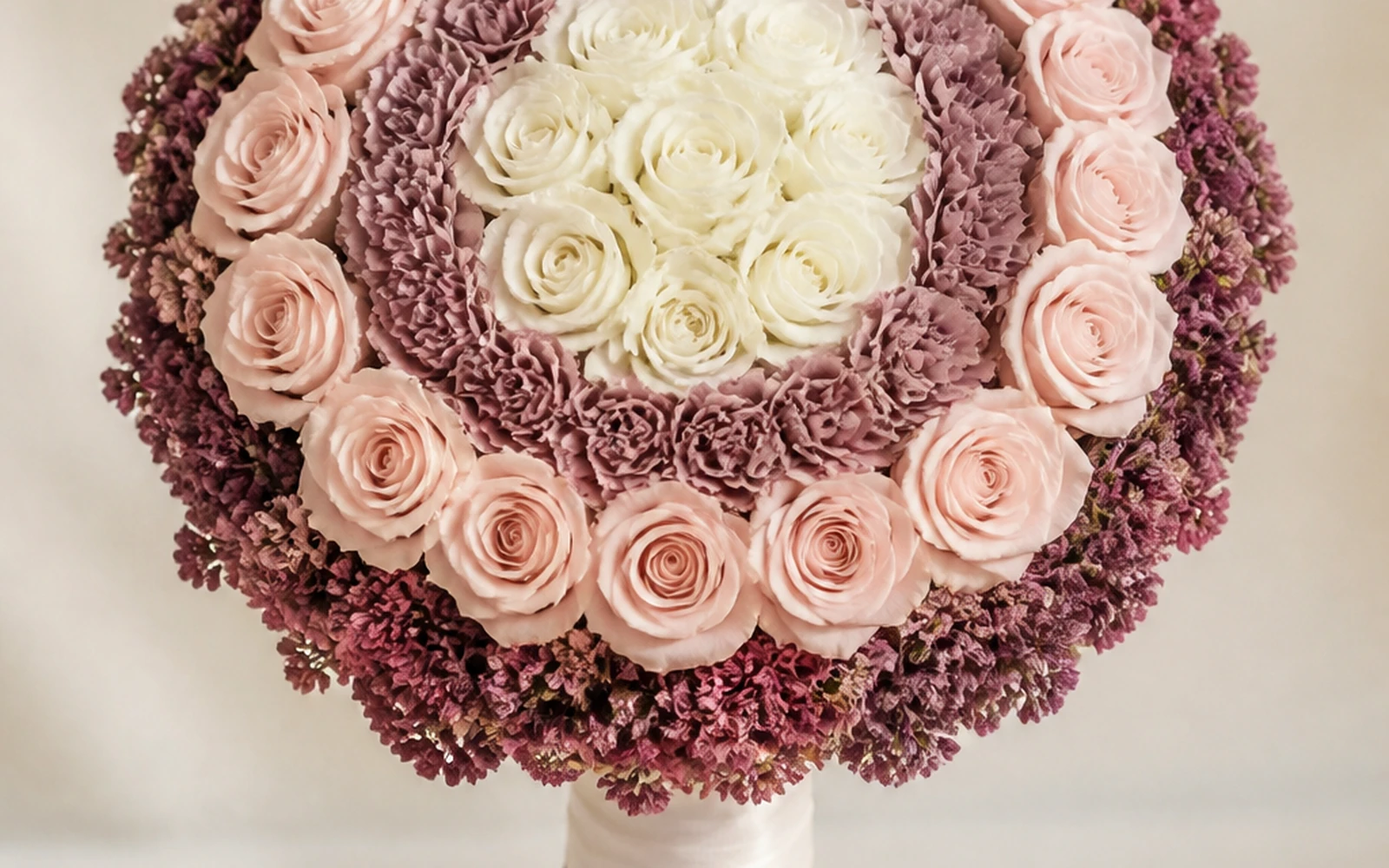
- Silhouette: A circular bouquet organized in visible concentric rings.
- Proportion: Compact to medium, with the visual emphasis concentrated in the flower face.
- Movement: Controlled and centered; rhythm comes from alternating bands rather than outward reach.
- Attire interaction: Creates a graphic focal point that can echo clean tailoring or contrast with textured fabric.
- Carrying experience: Usually centered in both hands with the patterned face kept forward.
- Venue: Strong in a formal room, courthouse, ballroom, or art-led ceremony where the ring pattern can be seen.
- Photography: Reads best from the front or slightly above, where the concentric construction remains visible.
Concentric rings make Biedermeier graphic and deliberate. I would use it when pattern and precision are central to the wedding design.
2. Cascade
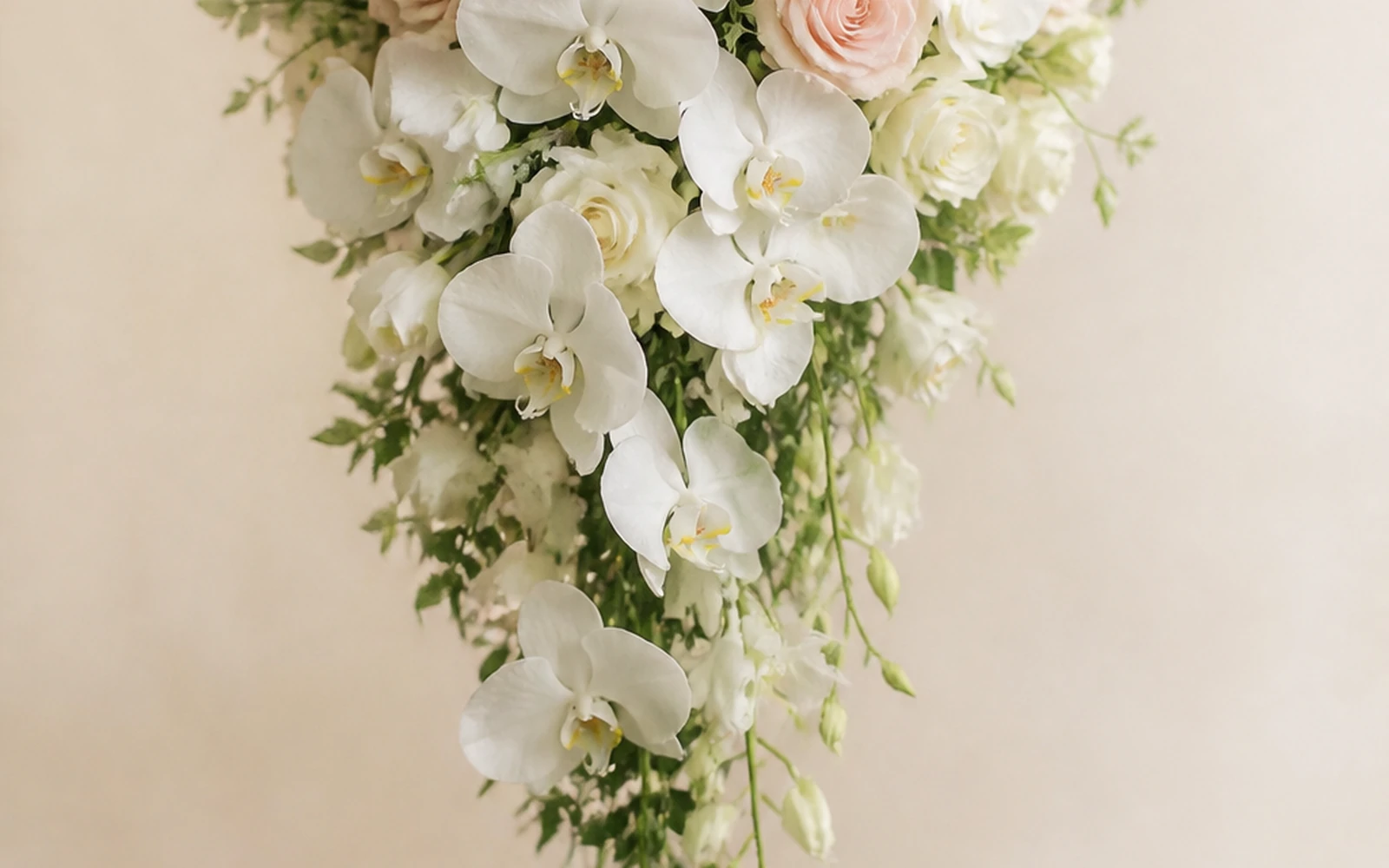
- Silhouette: A broad rounded top flowing into a narrowing point below the hands.
- Proportion: Medium to long vertical reach; the lower line becomes part of the attire silhouette.
- Movement: Pronounced downward travel, often with flowers or greenery spilling from the upper mass.
- Attire interaction: Occupies the center front and can cross draping, buttons, embroidery, or a clean column line.
- Carrying experience: Front orientation and lower clearance matter through walking, seating, vehicles, and narrow spaces.
- Venue: Suits a formal aisle, tall ceremony room, staircase, or setting with room for the vertical line.
- Photography: Creates a powerful full-length shape; close crops can remove the taper that defines it.
A cascade should earn its length. Compare the lowest point with hand position, attire detail, and the portraits that matter most.
3. Composite
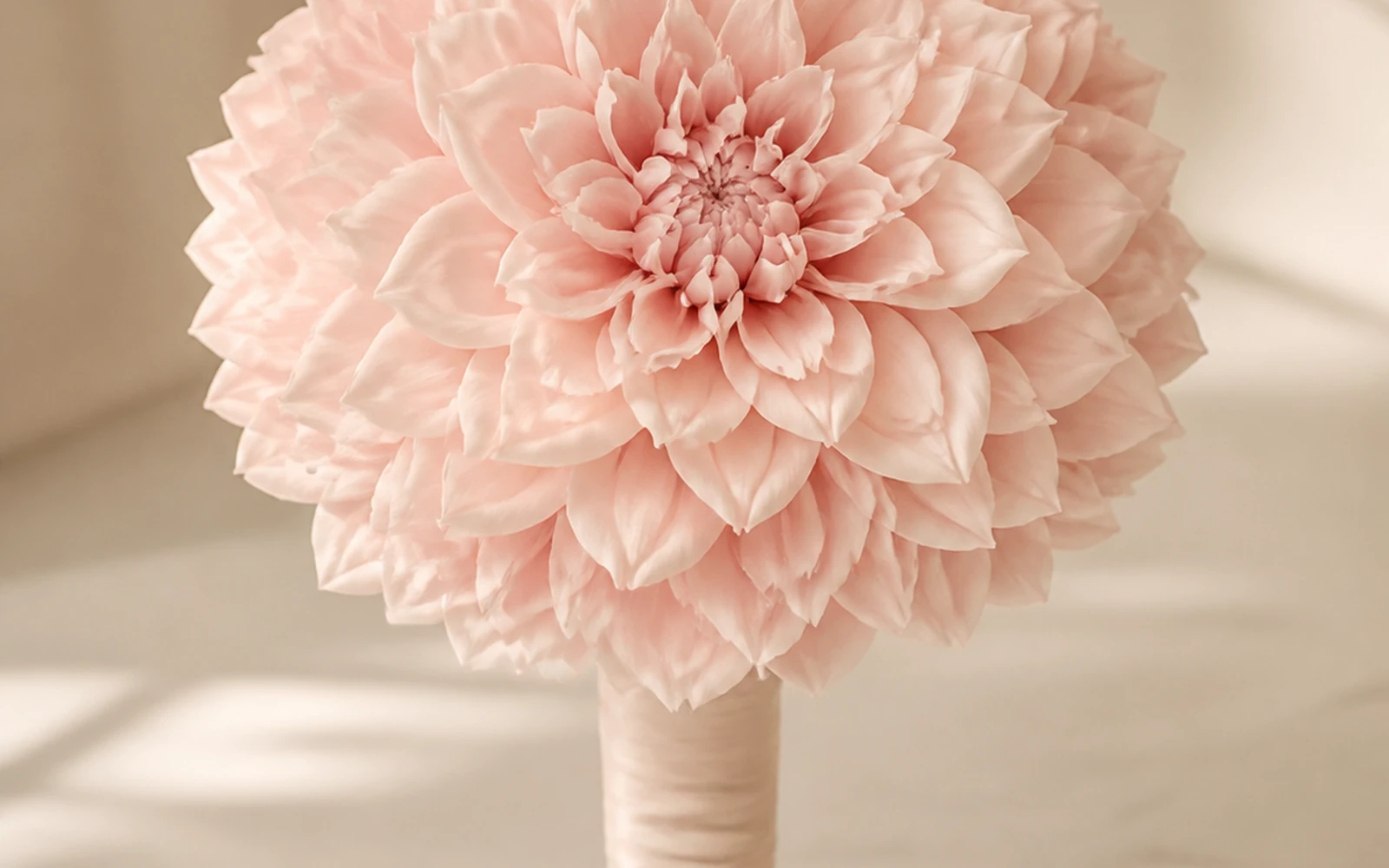
- Silhouette: A shallow disk built to appear like one oversized flower face.
- Proportion: Concentrated and relatively flat, with impact gathered into a single plane.
- Movement: Minimal outer movement; the detail lives within the constructed face.
- Attire interaction: Functions like one precise floral accessory against the front of the look.
- Carrying experience: The designed face stays oriented toward the viewer and needs deliberate handling.
- Venue: Memorable in a fashion-led, intimate, or formal setting where close detail will be noticed.
- Photography: Excels in close portraits and editorial detail frames; side angles reveal less of the illusion.
A composite bouquet assembles individual petals into one oversized flower effect. Precision, rather than volume, gives this style its impact.
4. Hand-tied
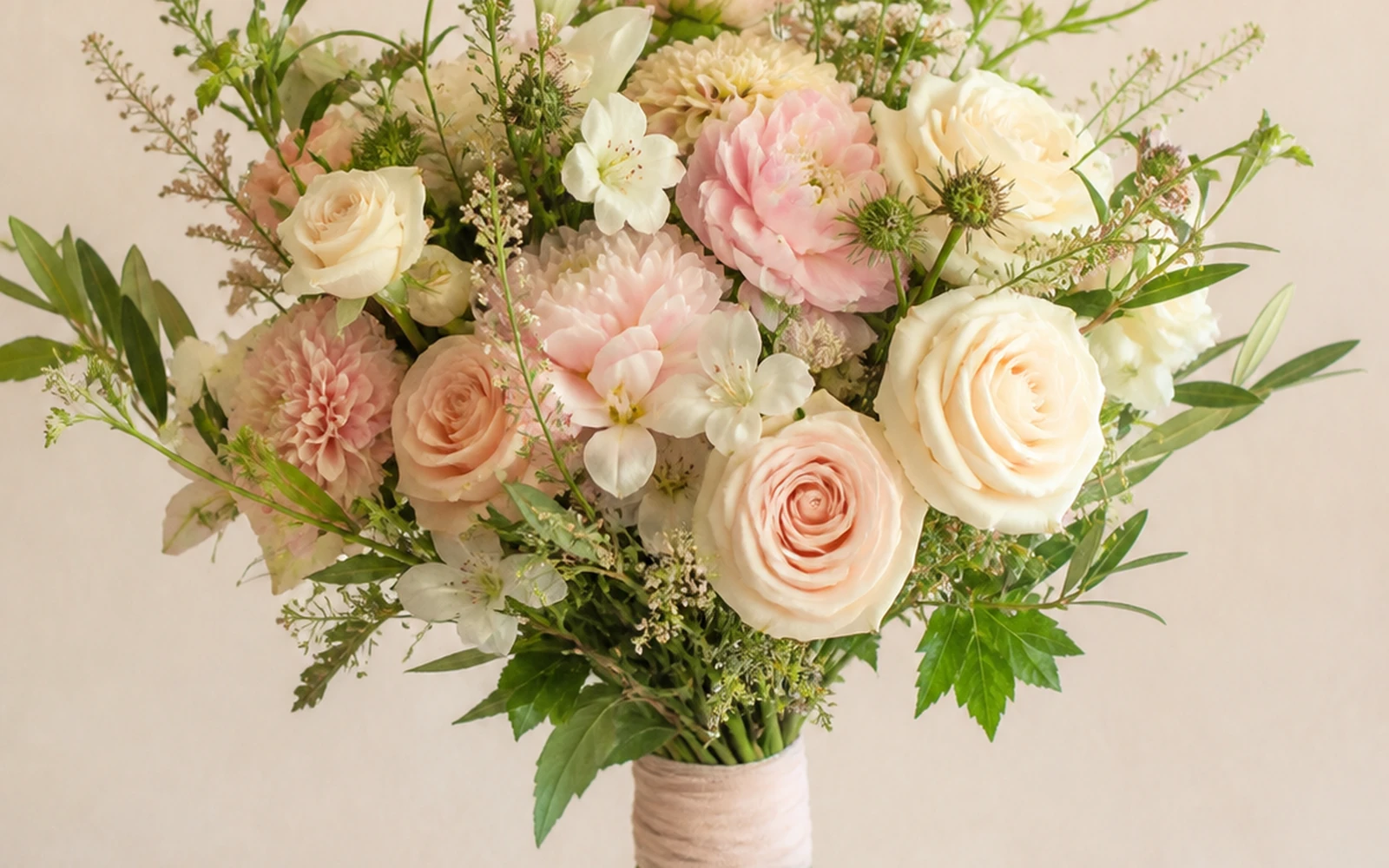
- Silhouette: A gathered bouquet with varied stem heights and a visible binding point, often with a loose garden edge.
- Proportion: Usually compact to medium, though width and stem length can create a broader presence.
- Movement: Natural outward and upward travel created by stems gathered into one carried unit.
- Attire interaction: The visible stems, ribbon, and irregular edge become part of the look and should leave chosen attire details clear.
- Carrying experience: Held at the binding point in one or two hands; grip comfort and front orientation matter through the ceremony and portraits.
- Venue: Adaptable to a garden, estate, courthouse, hotel, or ballroom when its scale and finish match the setting.
- Photography: Reads well in candid movement and angled portraits because the gathered stems and changing heights remain visible.
Hand-tied describes how the stems are gathered and secured. In a wedding bouquet, that construction can support a loose garden style, a cleaner rounded outline, or an asymmetrical direction; the florist still controls the finished silhouette.
5. Hoop
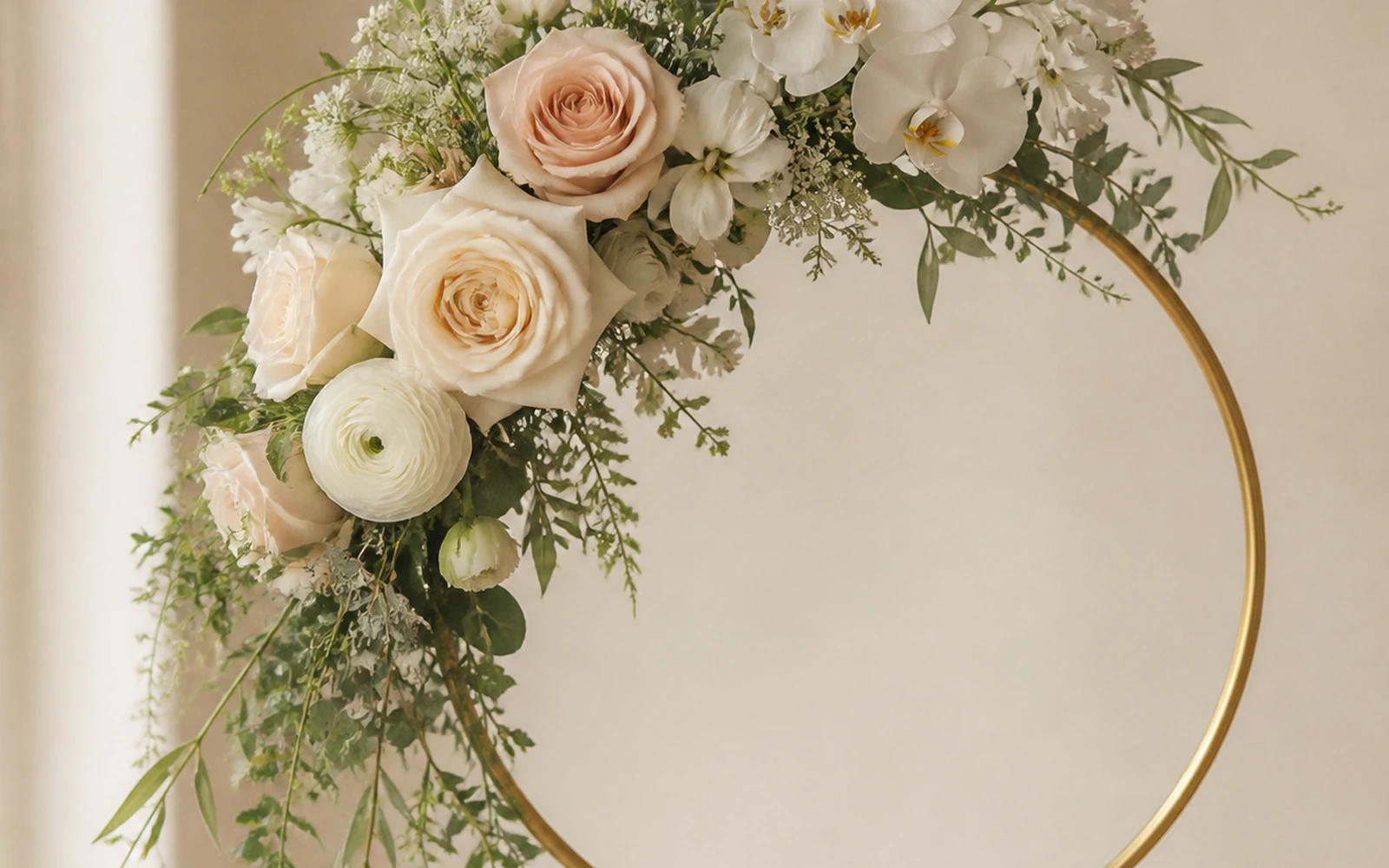
- Silhouette: An open circular frame with flowers attached around part or all of the ring.
- Proportion: The diameter sets the scale while the open center keeps visual mass light.
- Movement: Graphic circular motion with stems and flowers following the hoop.
- Attire interaction: Preserves visible fabric through the open center and creates a strong line beside the body.
- Carrying experience: Held by the hoop or slipped onto the wrist; the angle determines how the circle reads.
- Venue: Natural in a modern, garden, or bohemian ceremony with room for an unconventional carried object.
- Photography: Creates clear negative space and a recognizable circle in portraits and walking frames.
A hoop is structurally different from a stem bundle. Choose it because the open ring belongs in the visual language, not simply because it is unusual.
6. Nosegay
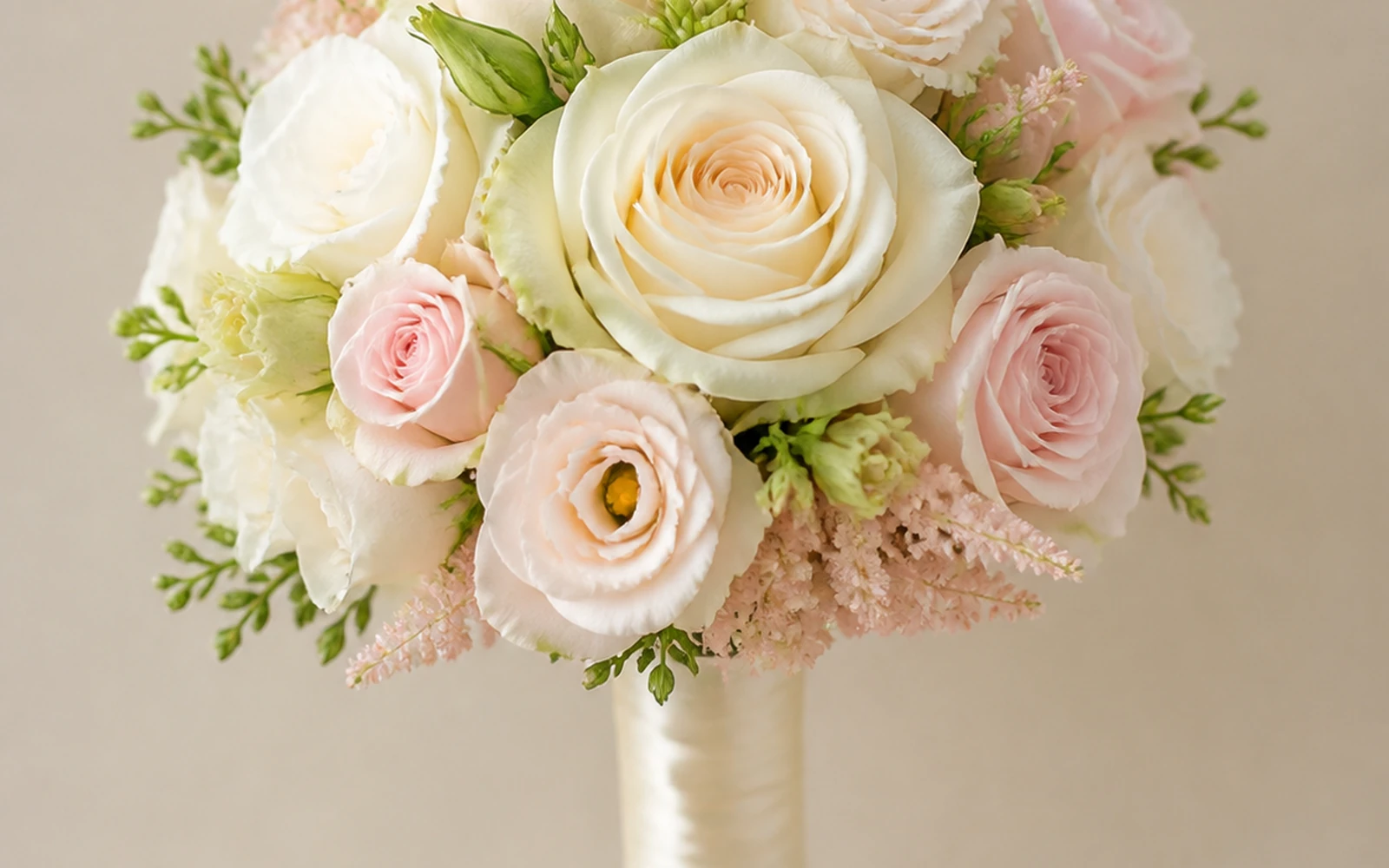
- Silhouette: A small, compact cluster with stems cut to a uniform length and finished tightly.
- Proportion: Petite and controlled, keeping the floral area close to the hands.
- Movement: Quiet and centered with little outward drift.
- Attire interaction: Leaves more neckline, waist, tailoring, and skirt detail visible than a broad bouquet.
- Carrying experience: Easy to center in one or two hands while keeping the polished front aligned.
- Venue: Fits a courthouse, intimate ceremony, classic interior, or formal setting that favors restraint.
- Photography: Reads cleanly in close portraits and group photographs without dominating the frame.
Compact scale, uniform stem length, and a polished finish make nosegay a deliberate small style rather than a reduced version of a larger bouquet.
7. Oversized
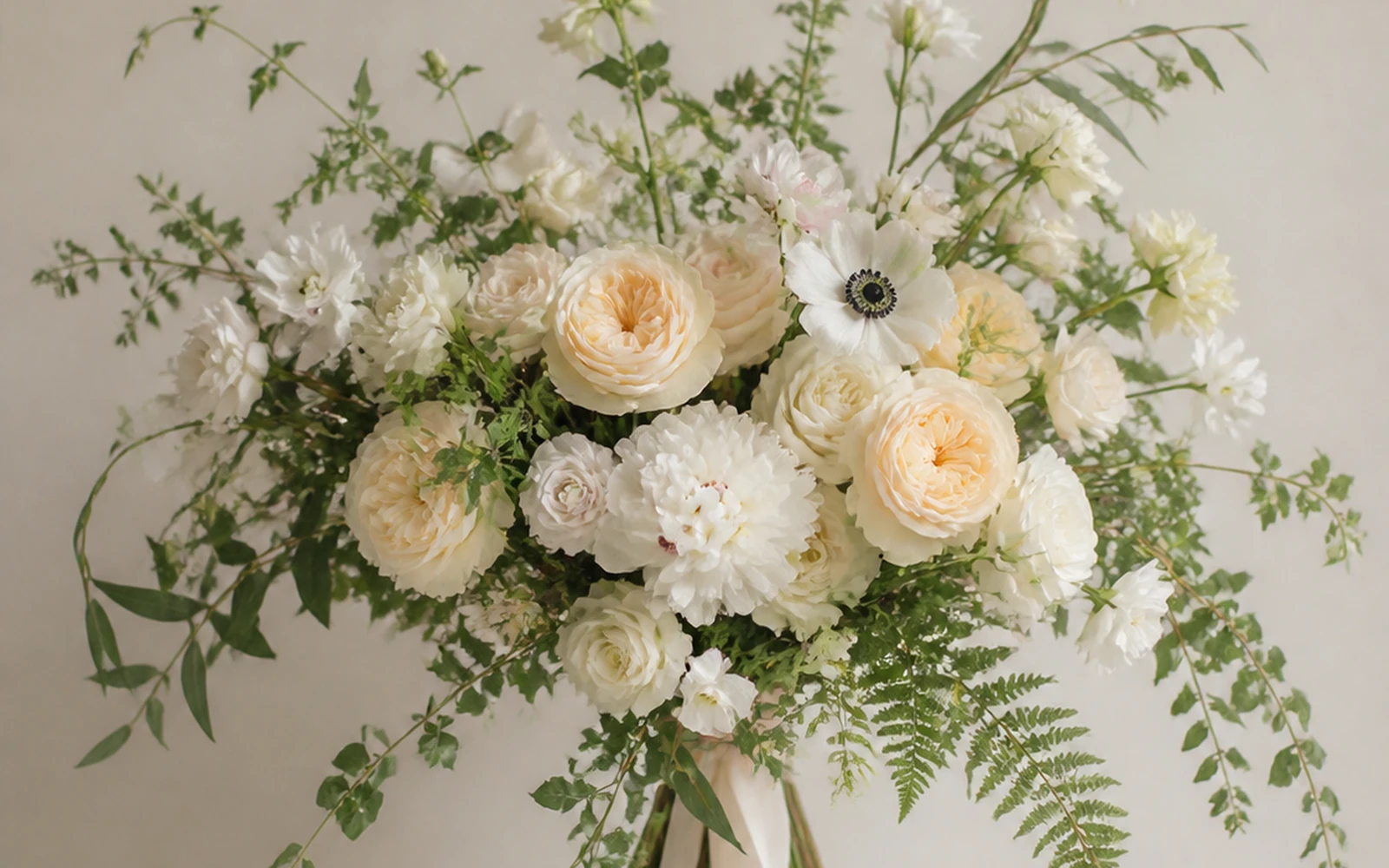
- Silhouette: A large freeform outline with flowers and greenery extending beyond the central mass.
- Proportion: Broad, tall, or both; its scale becomes a major part of the full look.
- Movement: Strong outward and directional reach, often with varied stem lengths.
- Attire interaction: Can overlap sleeves, bodice, waist, or skirt, so the intended coverage should be visible in the brief.
- Carrying experience: Grip, orientation, doorway width, and hand changes deserve rehearsal before the ceremony.
- Venue: Strong in a garden, estate, large ballroom, or open ceremony setting where the scale has room to register.
- Photography: Powerful in full-length and wide portraits; tight crops can turn the deliberate breadth into visual clutter.
Oversized should describe an intentional relationship to the wearer and room. Mark the desired width and height against a full attire image.
8. Pageant
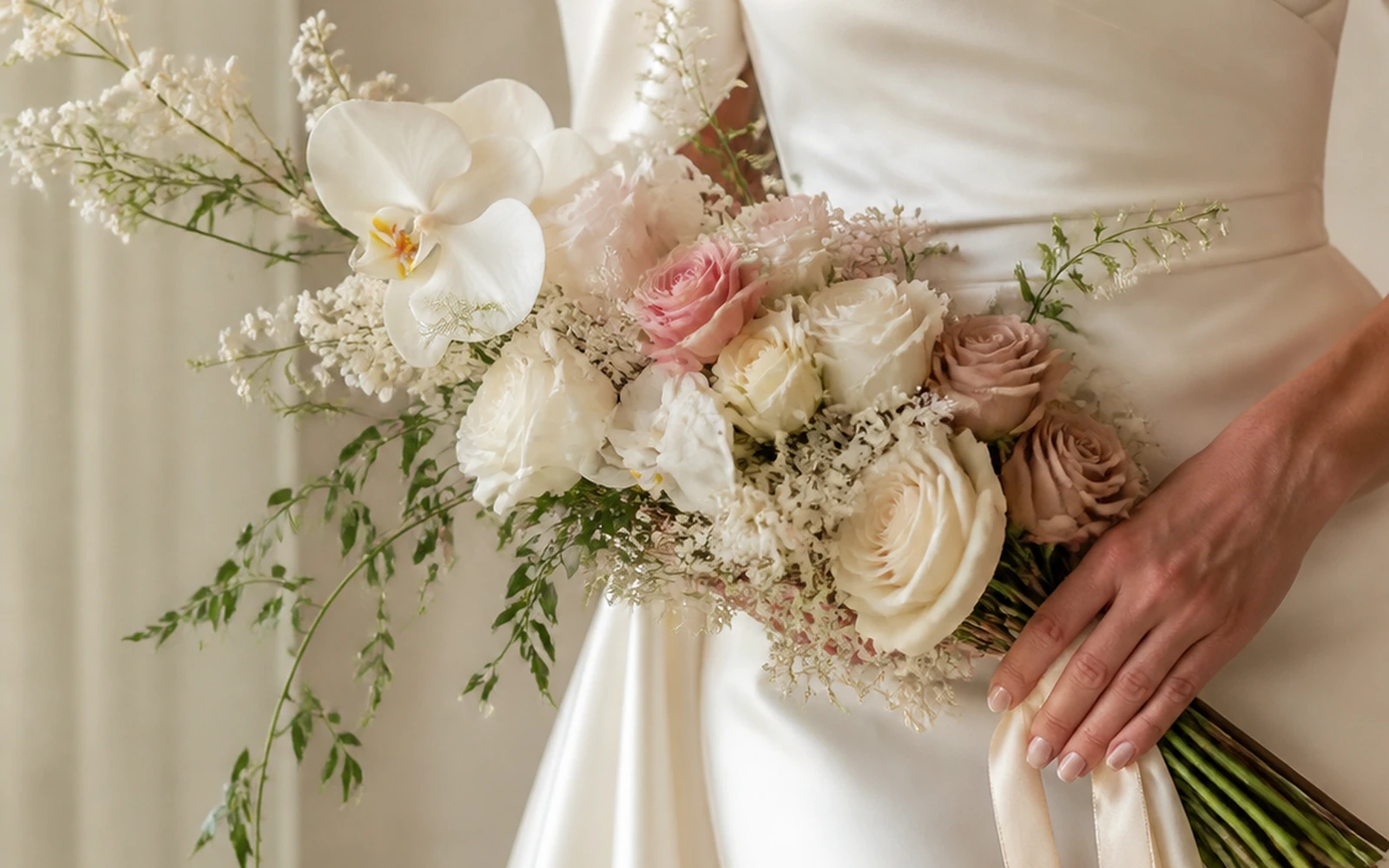
- Silhouette: A long-stemmed bouquet designed to rest along the forearm.
- Proportion: Visually long with restrained width and a clear linear direction.
- Movement: Calm horizontal or diagonal travel, depending on the cradle angle.
- Attire interaction: Leaves the center front relatively open and echoes long, clean attire lines.
- Carrying experience: Balanced on one arm, with a plan for greetings, rings, and moments when both hands are needed.
- Venue: Elegant for a courthouse, contemporary ceremony, processional, or modern formal room.
- Photography: Strong in profile and walking images where the forearm carry remains visible.
Pageant is also known as an arm sheaf or presentation bouquet. The defining choice is the long carried line rather than one flower recipe.
9. Pomander
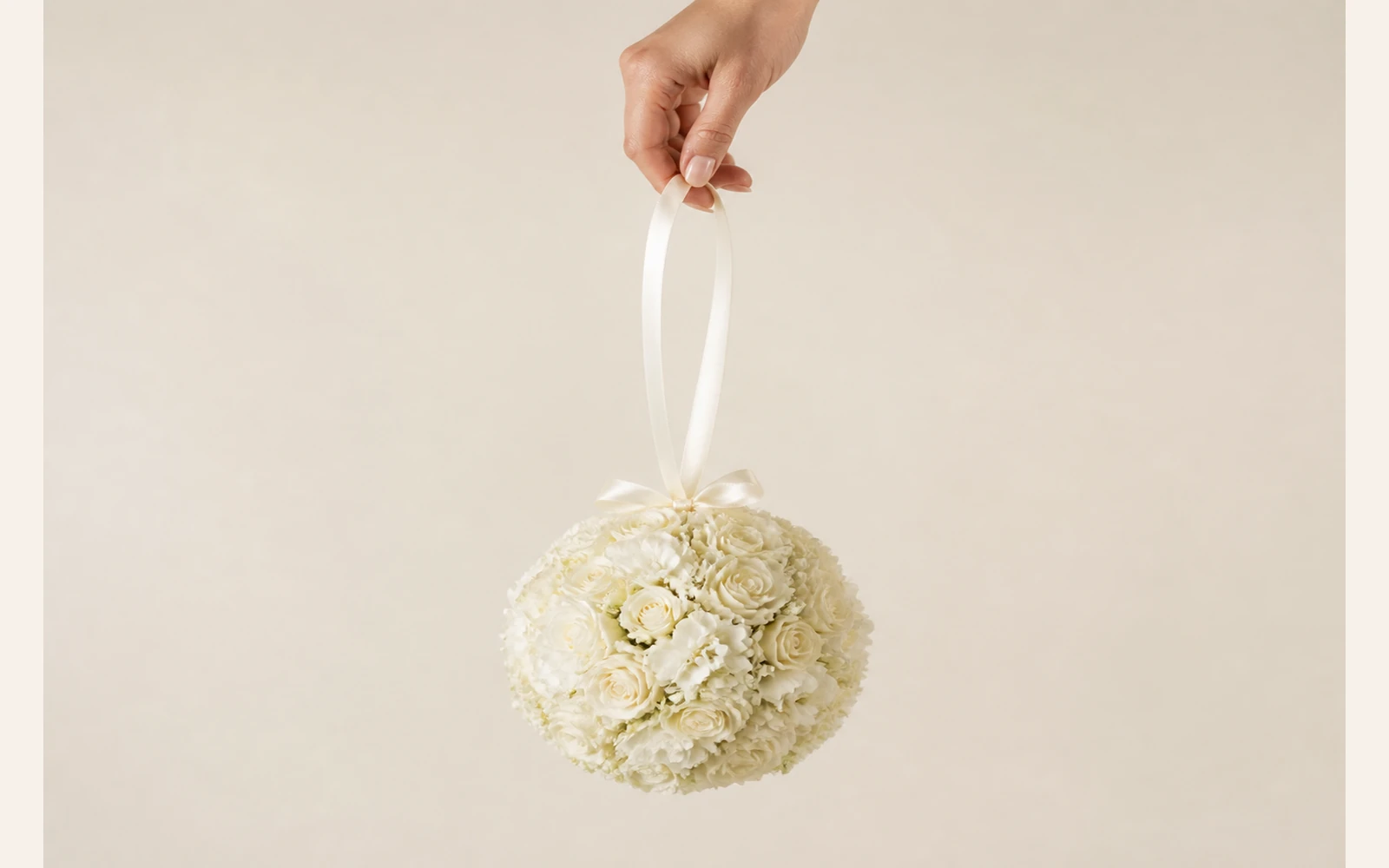
- Silhouette: A complete floral sphere suspended from a ribbon loop or handle.
- Proportion: Compact but visually dense, with the mass separated from the body when held low.
- Movement: Suspended movement; the sphere can swing gently while walking.
- Attire interaction: Leaves the bodice visible and places the floral form near the hand, hip, or lower side.
- Carrying experience: One-hand loop carry, with attention to swing and nearby surfaces.
- Venue: Fits a playful formal ceremony, stylized interior, or tightly art-directed celebration.
- Photography: Gives the camera a crisp graphic circle and visible motion in walking images.
The sphere and loop define the pomander. Use it when that object-like form belongs to the ceremony rather than treating it as a substitute for a stemmed bouquet.
10. Posy
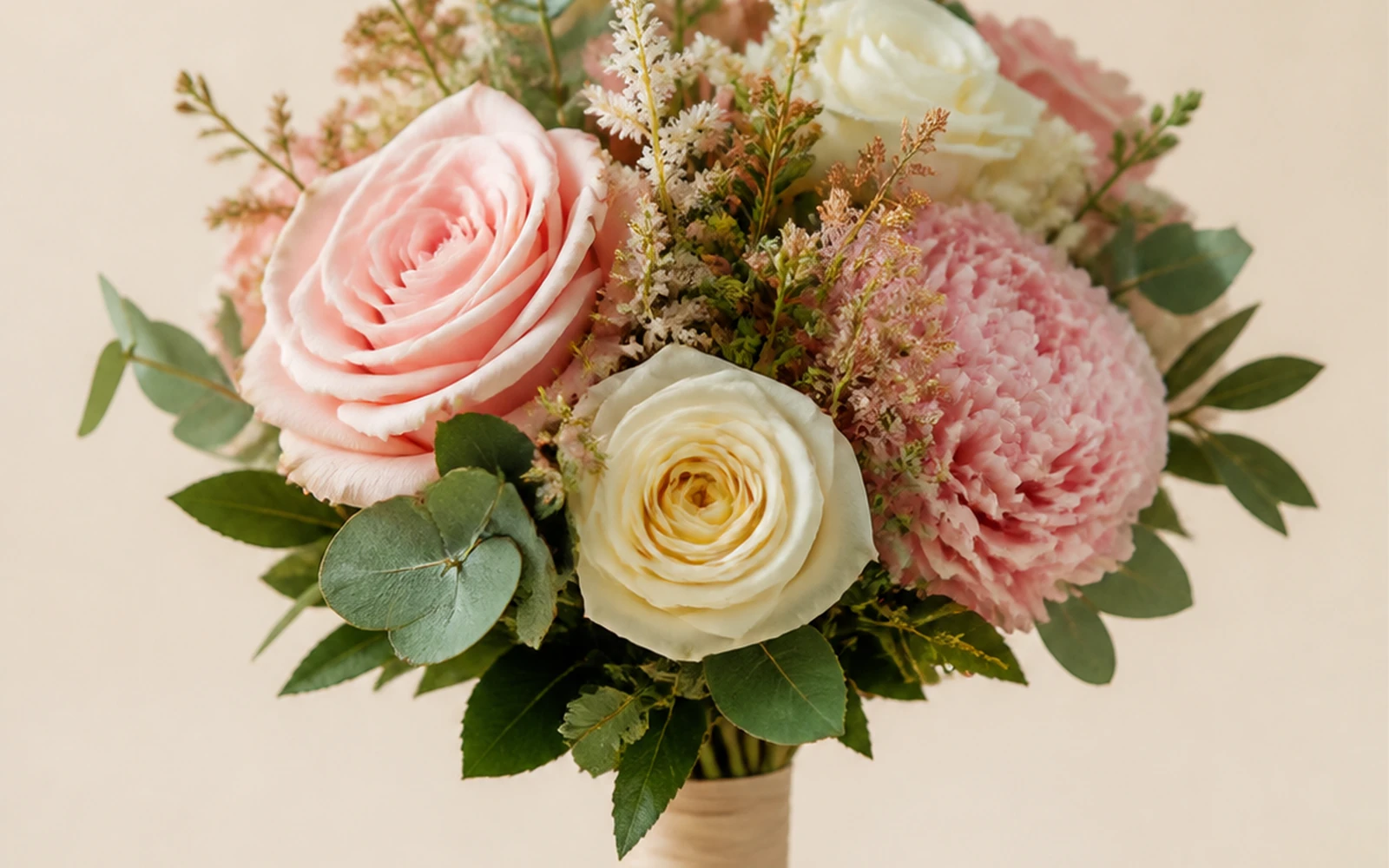
- Silhouette: A small, loosely gathered bouquet with a softer edge and more visible greenery than a nosegay.
- Proportion: Petite enough for one-hand carrying and easy integration into the full look.
- Movement: Light, relaxed, and slightly irregular rather than tightly centered.
- Attire interaction: Keeps the floral footprint restrained and lets clothing detail lead.
- Carrying experience: Comfortable for one hand, useful when the wearer will greet people or manage other small items.
- Venue: Suits an intimate wedding, courthouse, garden ceremony, or relaxed reception.
- Photography: Supports close portraits and candid movement without covering the attire.
Posy and nosegay share compact scale, but their finish separates them: the posy is looser and greener; the nosegay is tighter and more uniform.
11. Round
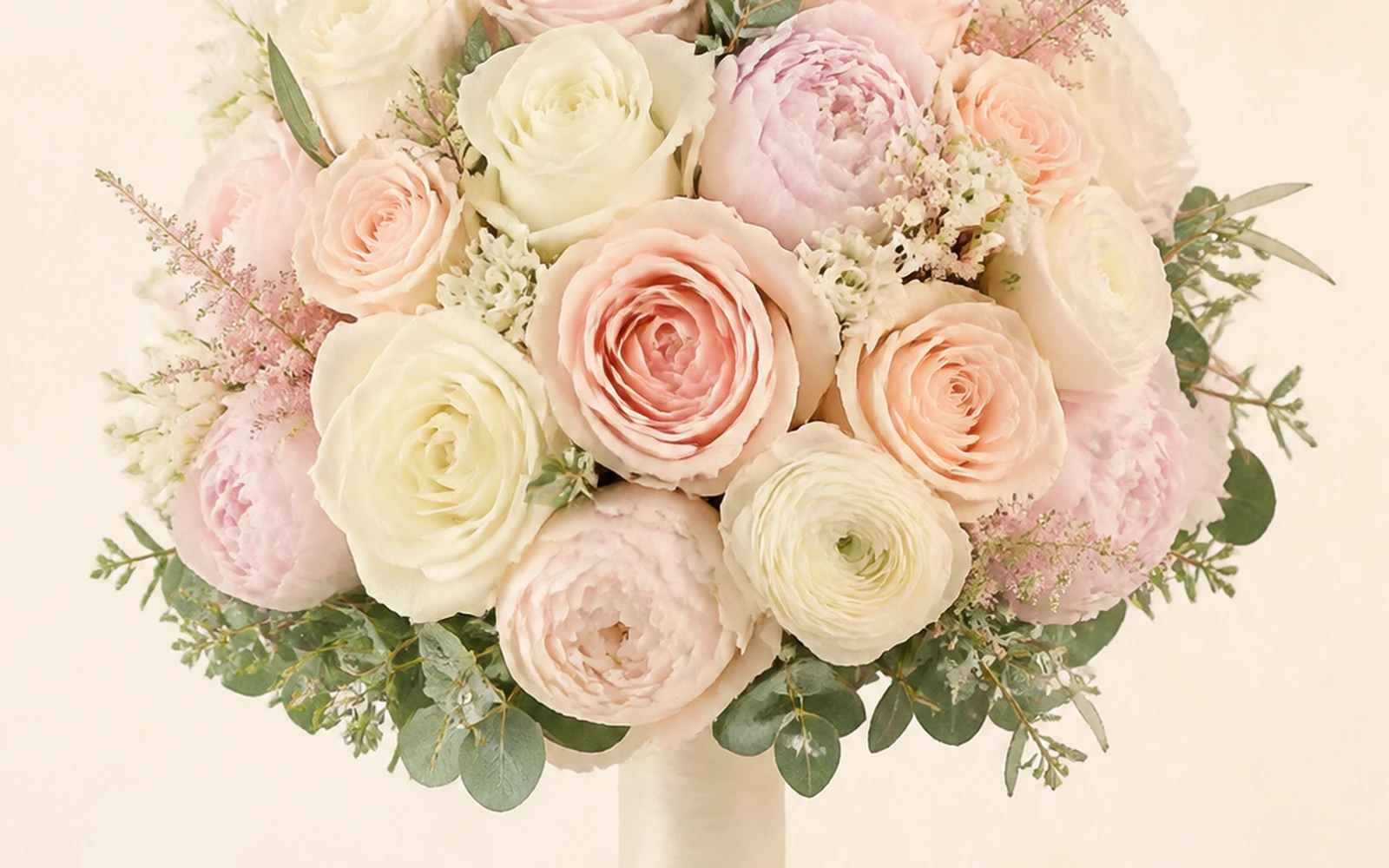
- Silhouette: A centered, symmetrical dome with an even floral edge.
- Proportion: Compact to medium visual mass; increasing diameter makes the bouquet feel broader quickly.
- Movement: Controlled and centered, with limited outward or downward travel.
- Attire interaction: Creates a clean focal point while preserving key waist and bodice details when scaled carefully.
- Carrying experience: Usually centered in both hands, making the designed face easy to understand.
- Venue: Natural in a courthouse, church, ballroom, or classic interior where a composed outline belongs.
- Photography: Reads immediately in head-on portraits and keeps a recognizable edge in closer frames.
Round works when the bouquet should feel polished and self-contained. Flower size and spacing can make the same basic structure feel delicate, lush, graphic, or soft.
Make the style work with attire, movement, and the camera
Place a full-length attire image beside the bouquet reference. Then mark three things:
- What must remain visible? Neckline, sleeve, waist, buttons, embroidery, train, jewelry, or tailoring.
- Where should the eye travel? Centered, outward, upward, sideways, or down.
- How will the person move? Walking, holding hands, carrying a train, greeting guests, entering a car, and posing for portraits.
This test replaces body-type rules with design information. An oversized bouquet can be right when broad floral scale is part of the intended composition. A small posy or nosegay can leave elaborate attire in the lead. The choice comes from the relationship between bouquet, attire, movement, and setting.
For a deliberately restrained scale, compare the bouquet against the actual attire, intended hand position, camera framing, and venue route. For color, texture, season, and emotional direction, continue with the wedding bouquet ideas decision framework.
Miami weddings add real carrying transitions
A Miami wedding may move from an air-conditioned hotel room to a terrace, garden, waterfront ceremony, vehicle, lobby, ballroom, and outdoor portrait location. Style planning should include every transition, especially when the bouquet is wide, long, carried on one arm, built on a hoop, or suspended from a loop.
Bring these details to the floral conversation:
- indoor or outdoor ceremony setting;
- sun, wind, and waiting exposure;
- portrait schedule and locations;
- hotel, condominium, or managed-venue access;
- elevators, vehicles, staircases, and narrow doorways;
- a water and holding location before the ceremony;
- the person assigned to the bouquet when the holder needs both hands.
For wide, long, framed, or suspended bouquets, use Rosa Fiora’s Delivery Policy to brief the property route and access contact, then plan how the bouquet will stay oriented through elevators, vehicles, and room changes. The broader wedding flower checklist assigns every floral piece to a place, time, and responsible person.
The style decision in one sentence
Finish this sentence before the consultation:
That sentence gives the bouquet a job. Flower names, palette, and texture can then build the character inside the right structure.