How to Keep Flowers Fresh Longer: 11 Mistakes to Avoid
A practical florist’s routine for keeping a cut bouquet fresh, from the first clean cut to the moment individual flowers begin to finish.
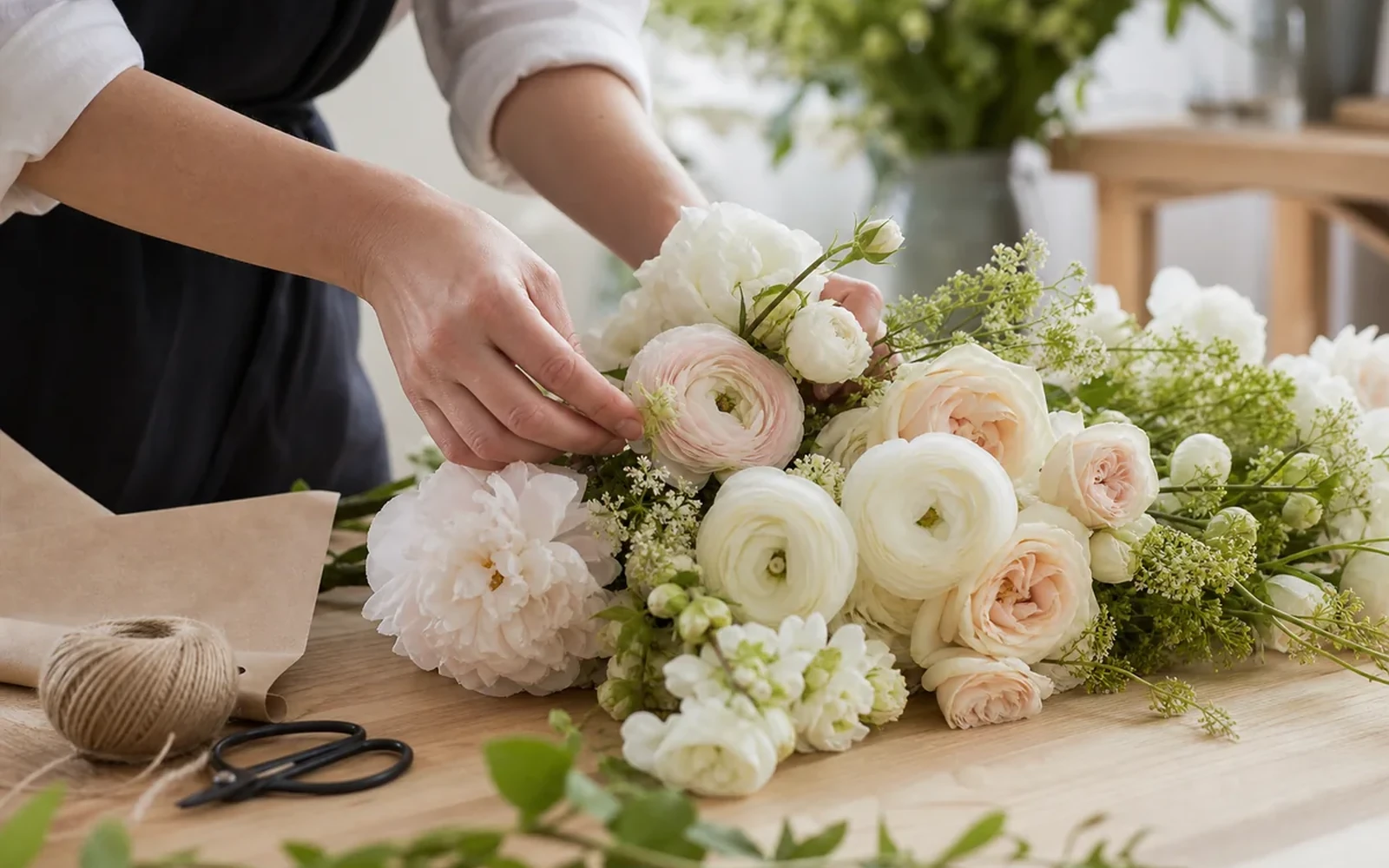
A bouquet rarely fades because of one dramatic mistake. It fades because several small things happen at once: the vase was only rinsed, leaves slipped under the water, the stems never received a fresh cut, or the arrangement spent an afternoon beside a sunny window.
I would fix the basics before trying any flower-care trick. Clean water, clean tools, open stems, and a cooler position do more for a bouquet than a cupboard full of improvised remedies.
Do these five things first
| First move | What to do now |
|---|---|
| Clean the vase | Wash it properly with hot, soapy water and rinse it. |
| Prepare the water | Mix commercial flower food exactly as directed, if provided. |
| Unwrap with purpose | Remove transport material and keep only a useful structural tie above the water. |
| Recut every stem | Use a clean, sharp tool and make a fresh cut without crushing the stem. |
| Clear the waterline | Remove every leaf that would sit in the vase water. |
Set out the vase, cutting tool, prepared water, and a towel before you unwrap the bouquet. The whole setup takes minutes, and the stems can move into water as soon as they are cut.
11 mistakes that shorten the life of a bouquet
Mistake 1: Using a vase that only looks clean
A quick rinse is not enough for a vase that held another arrangement. Iowa State University Extension recommends washing reused containers with hot, soapy water because residue, bacteria, and fungi work against cut flowers.
Pay special attention to narrow necks and textured interiors. If your hand cannot reach the bottom, use a proper bottle brush or choose a vessel you can clean completely.
Mistake 2: Crushing the stems with a dull tool
A clean knife or sharp clippers should make one confident cut. A dull tool pinches and bruises the base instead of leaving a clean surface for water uptake.
Use whichever tool you control safely. The important distinction is sharp versus crushing—not knife versus scissors as a matter of florist mythology.
Mistake 3: Treating transport wrapping as vase styling
Paper, sleeves, absorbent pads, and water-resistant transport material have finished their job once the bouquet reaches the vase. Remove anything that could enter the water or hold moisture against the stems.
A florist’s tie may still support the intended silhouette. I keep it only when it sits above the water, gives the stems enough space, and fits the vase naturally. If it pushes foliage underwater or compresses the bouquet into the vessel, I adjust it.
Mistake 4: Skipping the fresh cut
Trim a short section from the base of each stem before it enters the prepared water. University of Florida IFAS supports a fresh, non-crushing cut for water uptake.
You do not need to turn every stem into a 45-degree geometry lesson. Make a clean cut, work safely, and get the flowers into water promptly.
Mistake 5: Leaving leaves below the waterline
Submerged foliage softens and decays. Remove the leaves that would sit in the water, while keeping sound foliage above it when it belongs to the design.
Check the waterline after the bouquet is arranged. A narrow vase often raises the water higher than expected.
In a full rose bouquet, check beneath the outer blooms for leaves hidden below the waterline.
Flowers last longer when they begin with thoughtful preparation. Rosa Fiora bouquets are arranged for Miami delivery with their silhouette and presentation already resolved, so your work at home is simple: clean vase, fresh cut, clear waterline.
Explore fresh bouquets prepared for Miami delivery when you want the next arrangement to arrive ready for this routine.
Mistake 6: Waiting for the vase to run dry
Look at the water every day. Top it up with the correctly prepared solution when the level drops. If the water turns cloudy, develops an odor, or collects visible debris, remove the bouquet, clean the vase, and replace the solution.
I trust the vase more than a rigid calendar. Clear water may need only a top-up; cloudy water needs action now.
Mistake 7: Guessing the flower-food concentration
More flower food is not better. Use the packet’s exact water volume and concentration.
University extension guidance supports commercial flower food used as directed. It does not support a cocktail of aspirin, coins, soda, bleach, vinegar, or alcohol. If you want the full explanation, read what flower food actually does; for everyday care, follow the packet and leave the pantry alone.
Mistake 8: Choosing the warmest, sunniest spot
The brightest place in the room is often the hardest place for cut flowers. Purdue Extension recommends a cool position away from direct sunlight and excessive heat.
Move the vase away from heating vents, hot appliances, and strong airflow. Check the position in the afternoon, not only when you first arrange it; the light across a room changes during the day.
Mistake 9: Placing flowers beside ripening fruit
Ripening produce releases ethylene. UC Davis postharvest guidance identifies carnations, gypsophila, and some rose cultivars among flowers that can be sensitive to it.
For a mixed bouquet, the easiest move is separation: flowers on one surface, fruit on another.
Mistake 10: Leaving a finished stem in the arrangement
When one flower declines, remove it. Check the neighboring stems, clear fallen foliage or petals from the water, and recut sound stems if they need it.
A bouquet is easier to maintain when you treat it as a group of individual flowers. One weak stem should not sit unnoticed in the middle of everything else.
Mistake 11: Throwing away the whole bouquet when one flower finishes
Mixed bouquets age in stages. Remove the flowers that are done, shorten or regroup the stems that remain, and move them into a smaller clean vase if the original vessel now feels too large.
This final edit often reveals a second arrangement hiding inside the first. For realistic differences between flower types, continue with how long cut flowers last. Rose owners can use the more specific guide to making roses last longer.
The one-minute bouquet check
| Look at | Ask yourself | Action |
|---|---|---|
| Water | Is the level lower, cloudy, or odorous? | Top up or replace the solution. |
| Leaves | Has foliage slipped below the waterline? | Remove it. |
| Stems | Is one stem soft, damaged, or finished? | Edit it out and reassess the rest. |
| Position | Has sun, heat, or airflow reached the vase? | Move it to a cooler place. |
A fresh bouquet does not need constant interference. It needs a clean start and one quick, observant check each day.
When those habits become automatic, flower care stops feeling technical. It becomes part of the pleasure of having flowers in the room.