How to Choose a Wedding Florist: 12 Questions for the Right Fit
Use 12 focused questions to compare wedding florists on design thinking, planning, communication, production, proposal clarity, and fit for the celebration.
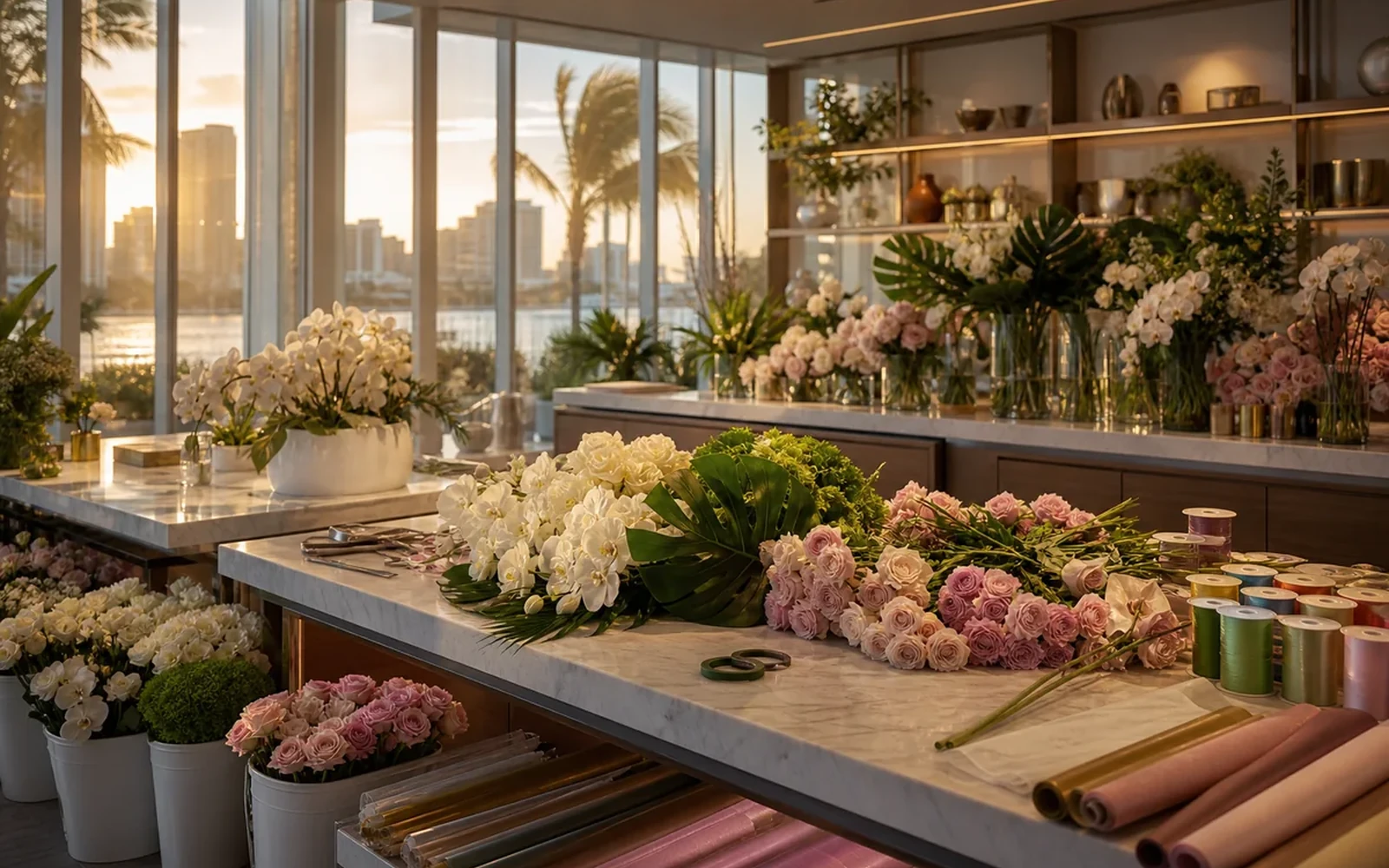
Choose a wedding florist by comparing how each person thinks, scopes the work, communicates, produces the designs, and collaborates with you. These 12 questions turn a consultation into a real comparison. For every answer, listen for specifics tied to your date, venue, priorities, and event flow rather than a polished description that could fit any wedding.
Bring the same core brief to each conversation: date, venue, guest count, indoor and outdoor spaces, attire reference, palette direction, three floral priorities, and a working scope. The complete wedding flower checklist can help you build that packet, while the wedding flower cost guide keeps the budget conversation in its own lane.
Confirm the three basics before comparing creative fit
Ask these three questions before the design comparison begins:
- Are you available on our date and able to take an event of this scope?
- What is your minimum investment or realistic starting range for this kind of celebration?
- Can we review the contract, deposit, payment schedule, change policy, cancellation terms, and insurance requirements?
Once those three basics align, use the following 12 questions to compare design thinking, scope, logistics, communication, and working fit. Rosa Fiora will gladly answer every one of these questions with you personally. If you are ready to discuss a Miami celebration, start a wedding-flower conversation with Rosa Fiora using the same brief you will bring to each consultation.
Start with creative interpretation
A wedding florist is doing more than locating flowers. You are choosing the person who will translate color, architecture, attire, scale, and atmosphere into one floral language. The first three questions show how that translation happens.
1. What should we bring to the first consultation, and how do you prepare for it?
A useful answer names the inputs the florist wants before discussing designs. That may include the venue, room sequence, table plan, guest count, attire, color references, floral priorities, and practical access information. It also explains how the florist uses those materials during the conversation.
What a useful answer reveals: the florist’s preparation style and whether the consultation will begin with your actual celebration. You should leave knowing what to send, how to organize it, and which decisions belong in the first meeting.
2. Which portfolio projects are most relevant to our wedding, and why?
Ask the florist to choose a small number of projects that connect to your needs. Relevance may come from room scale, bouquet proportion, color restraint, ceremony architecture, table density, or the movement of guests through the space. The explanation matters as much as the photographs.
What a useful answer reveals: how the florist reads their own work and connects past design thinking to a new setting. A strong comparison is precise: it points to scale, silhouette, placement, or palette behavior instead of relying on a broad style label.
Two current Wedding bouquets make a simple consultation exercise. One uses a soft ivory rose cluster, a gently irregular edge, exposed stems, and a champagne-toned finish. Ask what details give it ease rather than formality.
The other uses slender ivory calla in a long vertical line with pearl detail. Ask how that stronger gesture would relate to attire, body proportion, and ceremony setting.
The goal is to hear the florist explain design choices. You are comparing visual judgment, not asking for either bouquet to be copied.
3. How would you translate our references into an original floral direction?
A productive answer identifies the qualities inside your images: warm ivory rather than optic white, airy line rather than round mass, scattered color rather than equal distribution, or architectural movement rather than garden looseness. It can also connect those qualities to the venue and attire.
What a useful answer reveals: whether the florist can find the design logic behind your references. That skill gives your wedding a coherent point of view instead of a collage of borrowed details.
Read the proposal as a design document
A proposal should help you see both the idea and the work. Compare the creative direction, floral scope, and production scope as separate layers. This keeps a beautiful concept connected to the pieces and services that bring it into the room.
4. How will the proposal show the design direction and floral scope?
Ask how palette, flower character, silhouette, texture, and atmosphere will appear alongside the list of floral pieces. Then ask how quantities, sizes, locations, and special installations will be organized so you can follow the plan from personal flowers through ceremony and reception.
What a useful answer reveals: the proposal’s clarity. You should be able to identify the visual story, find every planned floral location, and understand which details still need a decision.
5. If our priorities shift, which design choices would you adjust first?
Give the florist a realistic priority change. You might place more emphasis on the ceremony, prefer a stronger bridal bouquet, simplify cocktail-hour flowers, or reduce the number of reception moments. Ask which adjustments keep the overall direction intact.
What a useful answer reveals: how the florist protects the most visible and meaningful choices. The response should show a hierarchy—what carries the room, what shapes photographs, what supports the guest experience, and what can become quieter.
6. Which parts of delivery, setup, placement, transfers, and breakdown are included in your proposed scope?
Walk through the event in sequence. Cover personal-flower handoff, ceremony placement, reception setup, any move between spaces, and the end-of-event plan. Tie each step to a location and responsible contact.
What a useful answer reveals: the production boundary behind the floral design. You can compare proposals more intelligently when the visible pieces and the work around them are both clear.
Compare the working rhythm
The next three questions move from what will be designed to how the project will be guided. Communication style matters because wedding flowers evolve through approvals, venue information, rental decisions, and final production details.
7. Who will guide our communication, and what decisions happen at each stage?
Listen for a simple path from consultation to proposal, design refinement, final details, and event production. The florist should be able to name the main point of contact and describe what they need from you at each step.
What a useful answer reveals: the cadence of the relationship. You will understand where feedback belongs, which materials to prepare, and how decisions move forward without scattering them across unrelated messages.
8. How do you plan substitutions around the visual qualities we care about most?
Name the features that matter before naming a backup flower. Those features may be blush-and-cream color, a large layered focal bloom, a clean vertical stem, fluttering movement, low fragrance, or a soft garden edge. Ask the florist to show how those priorities guide sourcing choices.
What a useful answer reveals: whether substitution is treated as design thinking. A clear response keeps attention on the qualities that make the composition recognizable, even when the final stem mix develops through sourcing.
For broader seasonal context, the flower season guide explains the difference between botanical bloom and commercial cut-flower availability. The wedding-specific seasonal planning guide turns that distinction into palette, texture, venue, and flexibility decisions.
9. How do you carry one design language across bouquets, ceremony flowers, and reception pieces?
Ask the florist to explain repetition and variation. A color may appear densely in the bouquet, lightly at the ceremony, and rhythmically across tables. One flower shape may anchor the personal flowers while a related texture creates scale in the room.
What a useful answer reveals: the florist’s approach to consistency. You want to hear how the wedding can feel connected without making every piece identical.
Put the design into the wedding-day route
A floral plan becomes real when it enters a property, moves through preparation spaces, meets the ceremony, and settles into the reception. In Miami, hotel loading, condominium access, valet traffic, security desks, elevators, outdoor transitions, and tight room turns can shape the route. Share those details while the plan is still being built.
10. What venue information and coordination do you need from us?
Offer the floor plan, room names, indoor and outdoor sequence, access contacts, setup information, table and rental plan, and any venue guidance already supplied. Ask which details the florist wants to discuss directly with the venue or planner.
What a useful answer reveals: how the florist connects design to place. The response should turn venue information into practical choices about scale, placement, arrival, room readiness, and coordination.
11. How will personal flowers and installations move through the wedding-day route?
Trace the personal flowers from preparation to photographs and ceremony. Then trace larger designs from arrival to assembly, placement, any room transition, and final position. Include the people and locations involved in each handoff.
What a useful answer reveals: whether the florist has formed a spatial sequence around the design. You can see where a handoff, access contact, holding location, or placement decision belongs before the event schedule becomes crowded.
12. What does a strong creative partnership with you look like?
Invite the florist to describe the kind of input that helps them do their best work. This may include consolidated feedback, ranked priorities, annotated visual references, timely venue details, or one designated decision-maker. Then compare that rhythm with the way you prefer to plan.
What a useful answer reveals: working fit. The right conversation should make it easy to understand how you will exchange ideas, refine choices, and move toward approval together.
Choose the clearest fit, not the longest answer
After each consultation, score the usefulness of the answers in five short lines:
- Design: Record how clearly the florist explained the path from your references to a distinct visual direction.
- Proposal: Confirm that you could identify the idea, pieces, locations, and production scope.
- Communication: Note who guides the project and which decisions come next.
- Logistics: Trace the flowers through access, setup, handoff, placement, and room transitions.
- Fit: Compare the florist’s feedback style and planning rhythm with the way you want to work.
Compare those notes beside the proposals. The best fit is the florist whose thinking becomes clearer as the conversation gets more specific—someone who can explain what they are designing, what the plan includes, how it moves through the day, and how you will shape it together.