Wedding Centerpieces: 9 Expensive Mistakes That Work Against the Room
A centerpiece can photograph beautifully and still block conversation or overwhelm the table. Learn the measurements and decisions that prevent it.
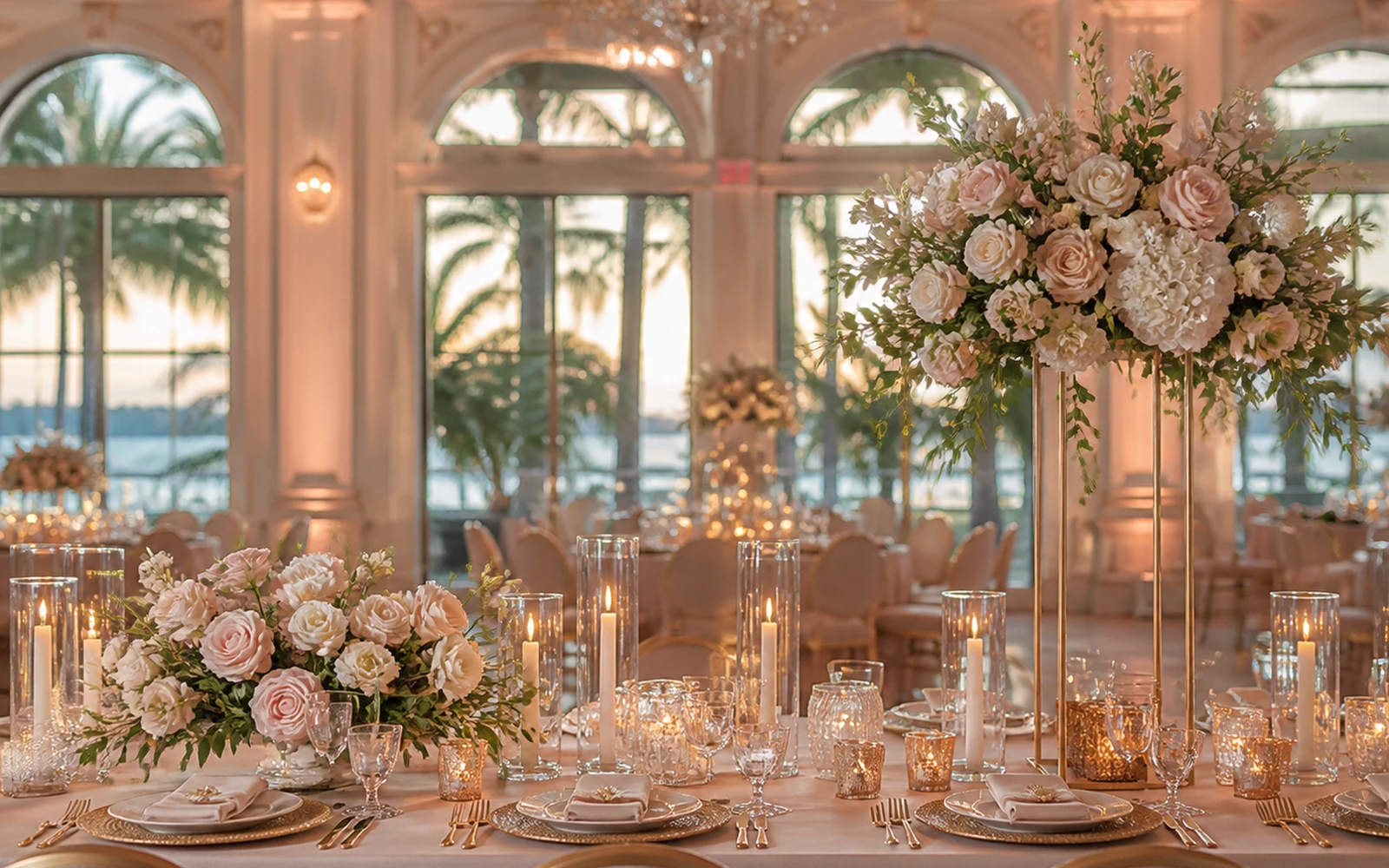
The nine expensive wedding-centerpiece mistakes are choosing height before testing sightlines, designing without exact table dimensions, forcing one footprint onto every table shape, buying floral volume before the table count is final, adding candles late, treating mechanics as an afterthought, planning repurposing without a transfer route, ignoring guest and service flow, and approving a beautiful image without an itemized production scope.
Every one creates a practical consequence: blocked faces, crowded place settings, awkward room rhythm, wasted floral quantities, production conflicts, unstable mechanics, failed transfers, narrowed circulation, or a proposal that costs far more than the picture suggested.
Before selecting stems, bring the working floor plan, table and rental details, guest count, venue access information, and visual references to a Wedding & Event Florals consultation. I design the occupied table and the full room—not an arrangement floating against a blank background.
Two current Rosa Fiora bouquets show opposite silhouettes. In the first, blush and ivory hydrangea and roses form a soft circular base illuminated by white orchid faces.
A dense dome of lavender roses creates a smooth, tightly controlled line.
These are retail arrangements, not wedding centerpiece packages or event quotes. Use them to compare width, density, line, and negative space—the same visual qualities that must be tested against an actual reception table.
Mistake 1: Choosing height before testing sightlines
“Low” and “tall” are incomplete design instructions. A low arrangement can still form a wide, dense wall between guests. A tall arrangement can preserve conversation if the visual mass begins above the seated sightline and the base remains controlled.
Effect on sightlines: When the floral mass sits between faces, guests lean around it to speak, place cards and table numbers disappear, and photographs collect flowers where expressions should be. A centerpiece meant to connect the table starts dividing it.
Correction: Test the complete design at seated eye level on the planned table. Use the real vessel, floral mass, candles, table number, place settings, and chairs. I want to see where the flowers begin, where they end, and whether guests across the table remain visually connected.
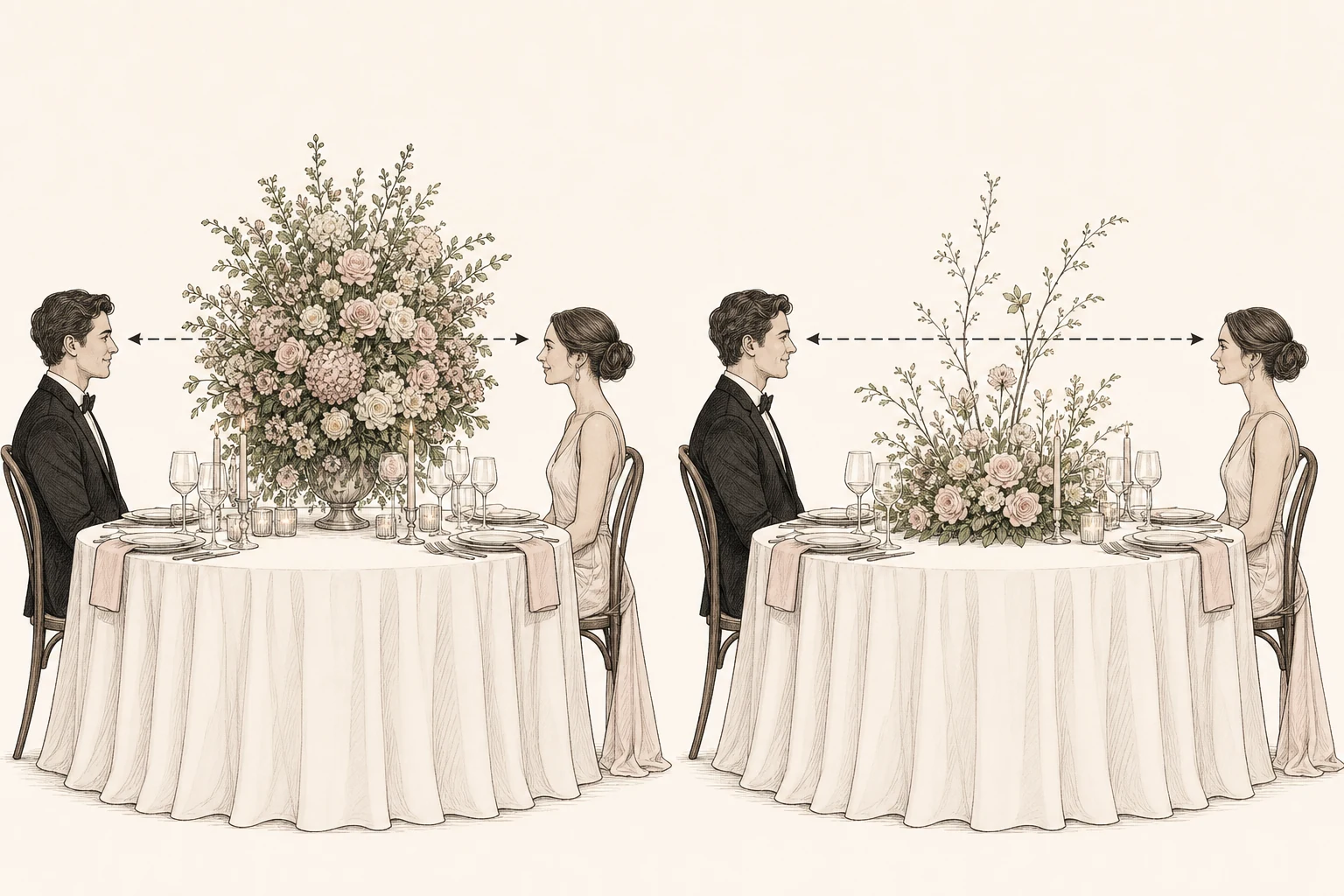
Mistake 2: Designing without exact table dimensions and place settings
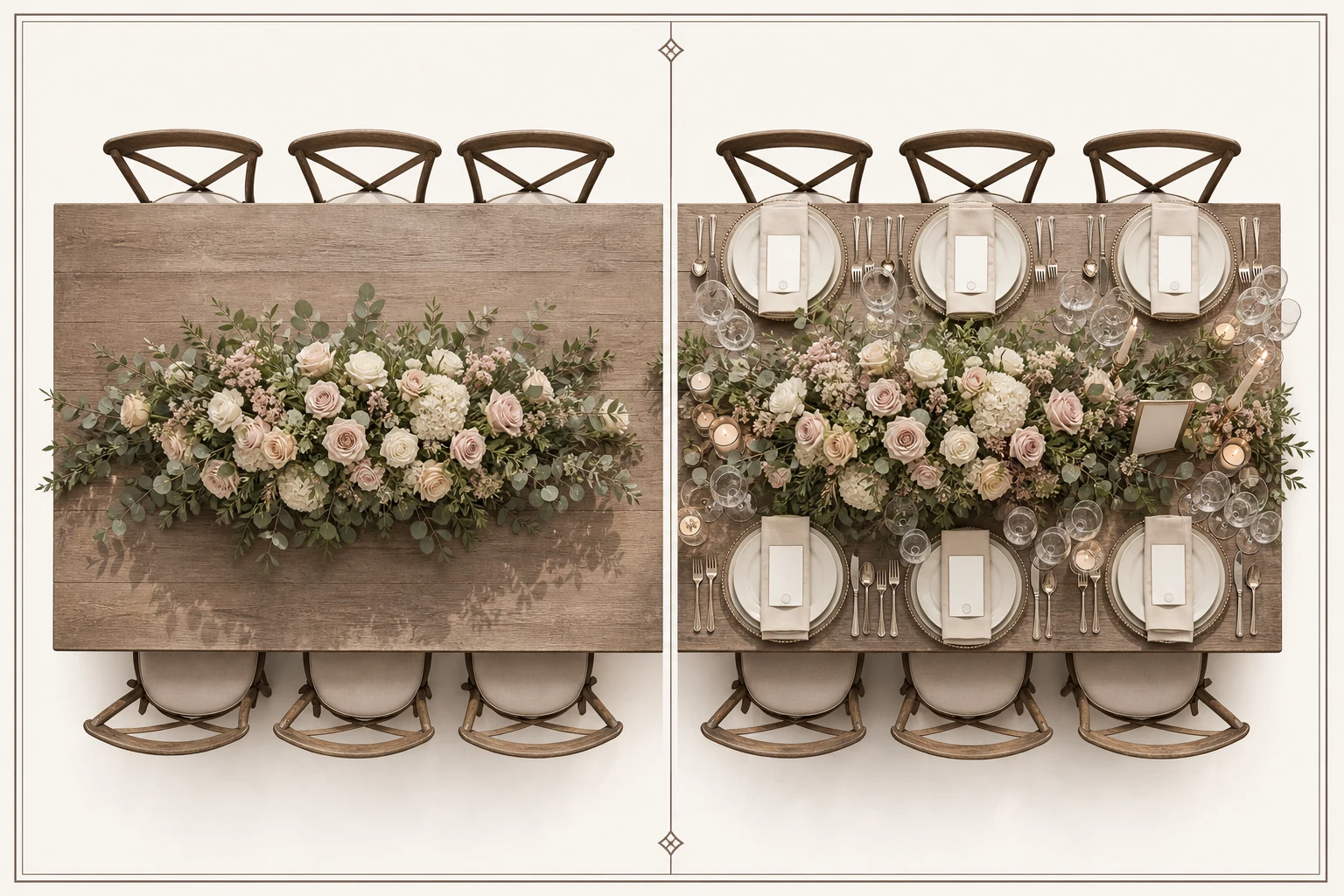
An empty round or rectangle can make almost any centerpiece look perfectly proportioned. The reception table will also hold plates, glassware, flatware, napkins, menus, favors, table numbers, bread or shared dishes, personal items, and service space.
Effect on table space: A broad floral footprint can push glassware into uncomfortable positions, cover printed details, crowd chargers, or leave servers nowhere to approach. The arrangement may be beautiful by itself and visibly oversized once the table is occupied.
Correction: Build a measured mock table from the venue’s table plan and the rental plan. Mark the centerpiece footprint before approving flower volume. If family-style food, multiple wine glasses, favors, or elaborate menus are planned, they belong in the mockup too.
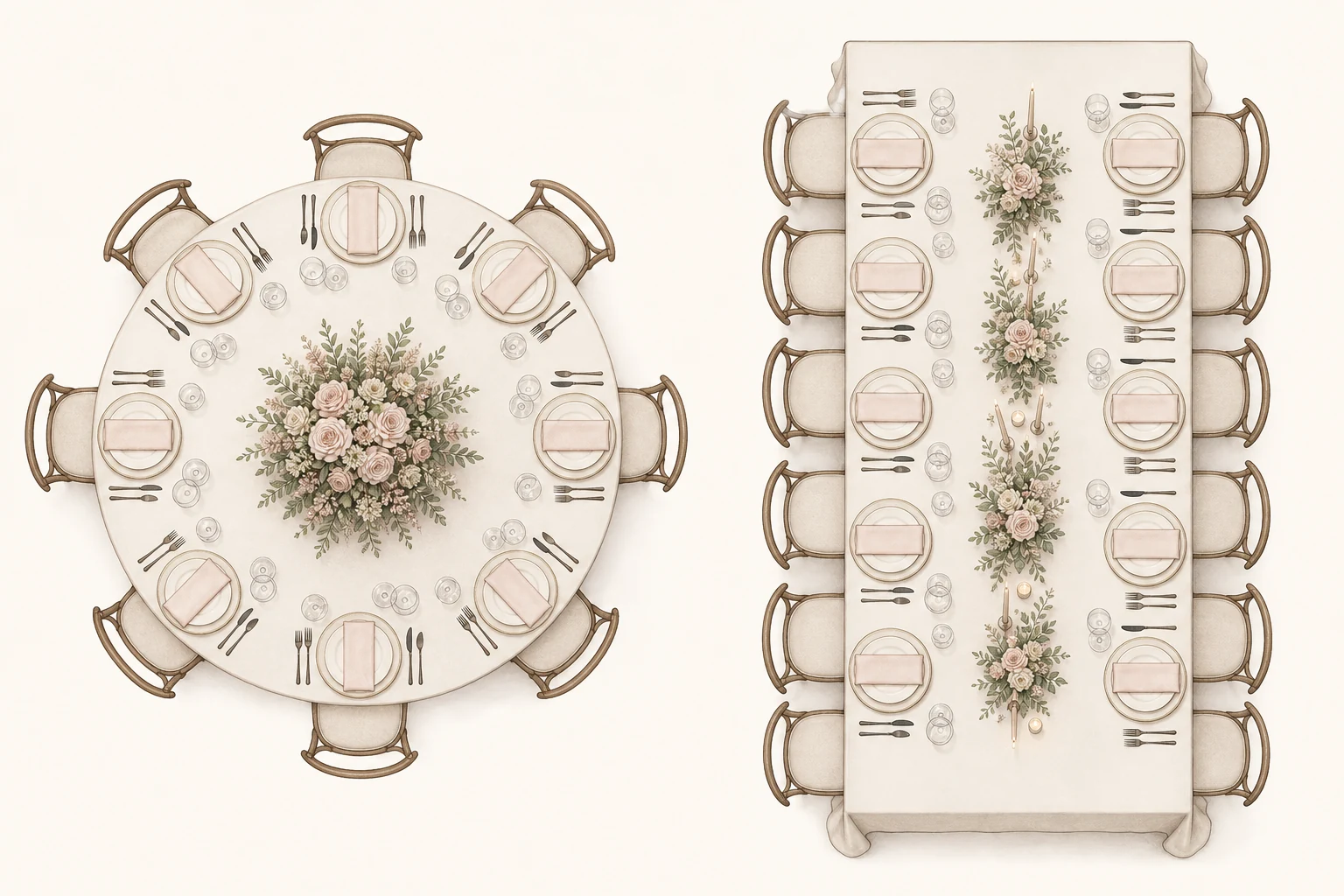
Mistake 3: Using one centerpiece footprint on every table shape
Round guest tables, long rectangles, communal tables, sweetheart tables, and cocktail tables ask for different rhythm. Repeating the same round design everywhere creates weak gaps on long tables and crowding on narrow ones.
Effect on table space and room rhythm: A round centerpiece dropped onto a long communal table can leave dead zones, while too many repeated units can turn the same table into a floral obstacle course. On a narrow rectangle, width steals place-setting depth very quickly.
Correction: Match the footprint and repetition to each table type. A round table may need one centered composition. A long table may work better with a sequence of lower pieces, bud vases, candles, or interrupted floral moments. Price each table type as its own design unit rather than shrinking or stretching one idea indiscriminately.
Mistake 4: Buying floral volume before the final table count
Centerpieces repeat. One additional table is not only another vessel; it can mean more flowers, mechanics, candles, transport space, setup time, and breakdown work. A late reduction can leave purchased material without a purposeful destination.
Effect on budget: Small quantity changes multiply across every repeated component. Ordering floral volume from an early guest estimate can create waste when tables disappear or expensive rush additions when the floor plan grows.
Correction: Establish a working floor plan, separate each table type, and price the design by quantity. Keep a clear revision point for guest-count changes. The Zola floral-budget guide also separates centerpiece style and repeated quantities because both move the floral budget. Use its broad estimates for early planning, then build the Miami proposal around the actual room, quantities, access, and production scope.
Mistake 5: Treating candles as an add-on
Candles are part of the centerpiece architecture. Holders occupy surface area, flame or light changes the visual balance, and ownership, setup, spacing, venue approval, and return responsibilities affect production.
Effect on table space and logistics: Late candle additions collide with foliage, glassware, menus, and service zones. They can also trigger a scramble over who supplies holders, who lights them, what the venue permits, and who collects rented pieces afterward.
Correction: Design flowers and candles together. Confirm the candle type, holder dimensions, quantity, spacing, supplier, venue requirements, placement responsibility, and return plan before the mock table is approved. Project-specific venue confirmation—not an inspiration photo—governs the final plan.
Mistake 6: Hiding mechanics instead of designing them
Mechanics include the vessel, water source, anchoring, support, attachment method, and everything required to hold the intended shape. Choosing flowers first and trying to hide the structure later creates bulky bases and fragile fixes.
Effect on space, logistics, and budget: Exposed or unstable mechanics consume usable tabletop area, complicate transport, slow installation, and can demand extra flowers or materials for concealment. A vessel that looks delicate in a rendering may need a very different support system in the room.
Correction: Select flowers, mechanics, vessel, water, anchoring, and concealment as one system. The design should survive its planned transport and installation sequence, fit its allotted footprint, and look resolved from the guest’s angles—not only from the photographer’s preferred side.
Mistake 7: Planning repurposing without a transfer route
“Move the ceremony flowers to the reception” sounds efficient until the piece must pass through a doorway, enter an elevator, cross a guest arrival path, or land on a surface that was never measured.
Effect on logistics and budget: A piece may be too heavy, fragile, wet, wide, or slow to move during the available transition. When the route fails, the wedding can pay for duplicate flowers, duplicate labor, or a reception location left unfinished.
Correction: Assign every movable piece a destination, route, timing, crew, and receiving surface. Confirm access with the venue. Repurposing saves only when the arrangement and the transfer are designed together; otherwise it is an optimistic note in a proposal.
Mistake 8: Ignoring guest and service flow around focal tables
Sweetheart tables, head tables, escort displays, bars, cake tables, and room entrances attract larger floral gestures. They also sit beside chairs, aisles, service paths, cameras, and guests who need to move.
Effect on guest flow: Overscale pieces can narrow circulation, crowd chairs, interrupt a server’s route, hide the couple from parts of the room, or turn a bar queue into a bottleneck. The problem may appear only after every chair is pulled out and dinner service begins.
Correction: Review the full floor plan from entrance through dinner, dancing, and breakdown. Look at the space around—not only on—the table. I check the arrangement’s width, chair pullback, nearby queues, camera views, and service approach, then ask the venue to confirm its own access and operational requirements.
Mistake 9: Approving the image without an itemized production scope
An inspiration photograph shows the finished surface. It rarely tells you who owns the vessels, how many units exist, what mechanics are hidden inside, how the flowers arrive, how long setup takes, whether pieces move, or what happens after the reception.
Effect on budget: A vague scope leaves major costs outside the first visual discussion. Vessels, rentals, candles, delivery, setup, transfers, stated taxes or fees, and breakdown can appear late unless the proposal assigns each task and charge from the beginning.
Correction: Compare itemized proposals, not images alone. Ask the scope to name floral design, quantities by table type, vessels, rental ownership and return terms, candles where applicable, delivery, setup, transfers, breakdown, and stated taxes or fees. The clearest proposal tells you what will be made, where it goes, who handles it, and what remains after the event.
The Miami centerpiece check
South Florida changes the production conversation because a Miami reception may combine secured property access, loading instructions, elevators, valet or parking constraints, indoor holding, an outdoor terrace, and a narrow setup window. Heat, sun, humidity, wind, and sudden rain can also change where a finished floral piece waits and when it can safely move into position.
Send the florist and venue the same practical information: exact address, receiving contact, access restrictions, setup window, table and rental plan, indoor and outdoor locations, ceremony-to-reception transition, and breakdown expectations. Rosa Fiora’s retail delivery policy confirms why complete access details and managed-property handoffs matter, while wedding installation, transfers, flame decisions, and breakdown need their own project-specific consultation.
Approve the room, not only the centerpiece
A strong centerpiece plan protects conversation, place settings, room rhythm, service, transfers, and budget before the first flower is ordered. Bring the floor plan and occupied-table details into the design conversation early. Then the flowers can be generous where the room can carry them and restrained where guests need space.
Build the rest of the plan in sequence: use the complete wedding flower checklist to map every floral location and handoff, compare the average wedding flower cost breakdown to understand where production enters the budget, and browse the current Rosa Fiora Wedding collection for bouquet-level design references. For a branded business event, continue with the guide to planning corporate event flowers around the brand and guest path. Rosa Fiora does not yet publish a separate wedding portfolio page, so the consultation remains the source for event-specific work and scope.