New Baby Flowers: Choose for the Parents and Their Space
Celebrate the parents with flowers chosen for their style, available space, receiving plan, and the rhythm of their first days at home.
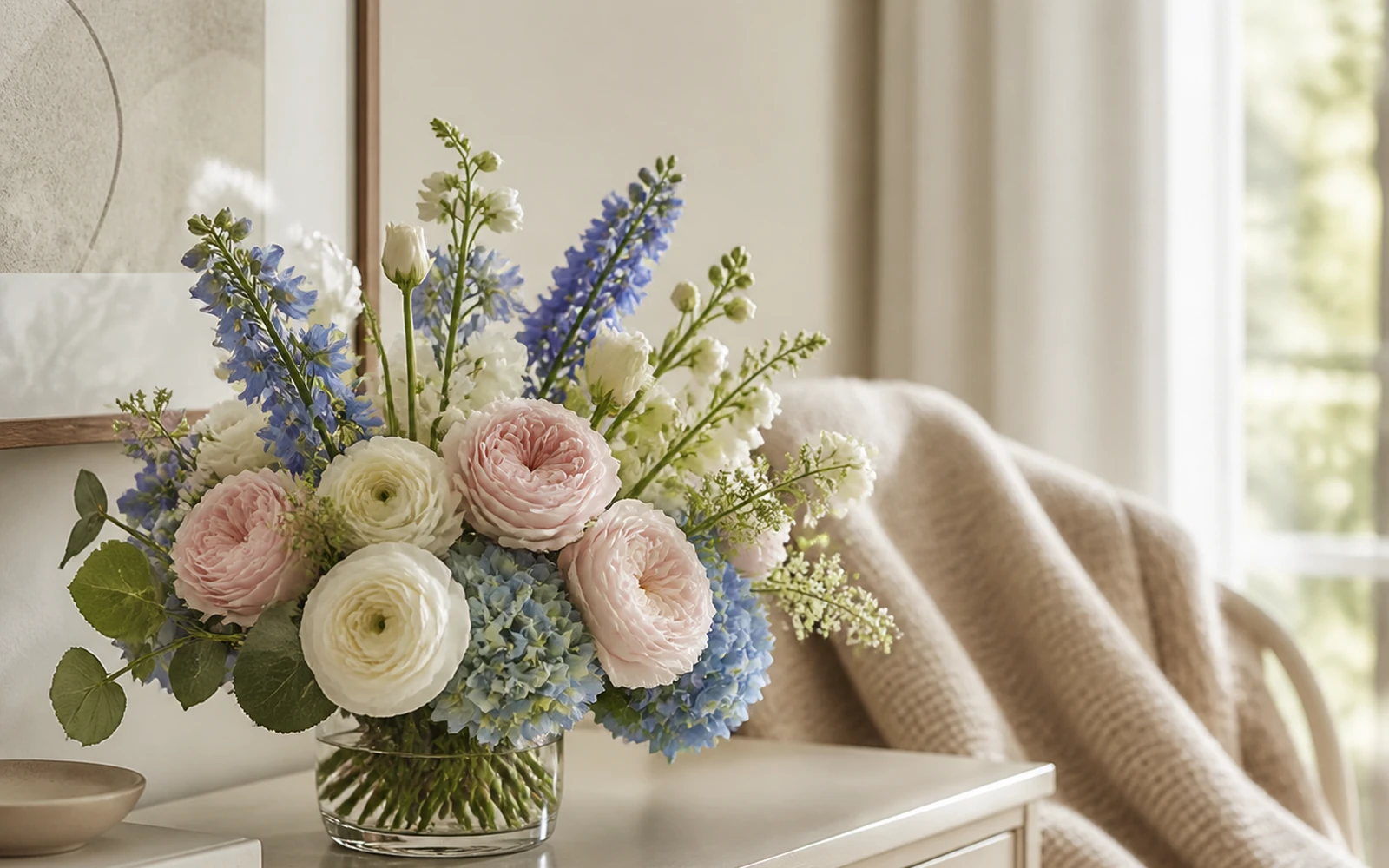
Choose new baby flowers for the parents’ taste, their available space, and their current receiving plan. A finished vase, basket, or box in colors they already love gives the gift a clear place in their home. Pair it with a short card that congratulates them and welcomes the baby.
Four decisions are enough to begin:
- Their style: quiet and airy, bright and garden-inspired, or graphic and modern.
- Their space: a narrow clear surface, a broad table, or a known spot chosen by the parents.
- Their routine: a delivery day and receiving contact chosen by the parents.
- Your message: congratulations for the parents, a welcome for the baby, and your name.
View new baby flowers once you know those four details. Start with the parents rather than a conventional pink-or-blue formula; their home and preferences make a far better design brief.
Blue, pink, and ivory hydrangea, orchids, peonies, roses, and stock create a painterly direction for parents who already live with layered color and expressive design.
Read the parents’ style in plain sight
You can often find the flower direction without asking them to choose a bouquet. Look at the visual decisions they have already made.
A home with white walls, pale wood, and a few sculptural objects may call for a clean silhouette and a limited palette. A room filled with art, textiles, or blue-and-white ceramics can carry more color and movement. Parents who love garden flowers may prefer hydrangea, rose, ranunculus, stock, or delphinium arranged with visible texture.
Useful clues include:
- colors repeated in their home;
- the palette of an invitation or announcement they chose;
- flowers they have displayed before;
- whether their style feels minimal, romantic, colorful, or architectural;
- the kind of vessel or basket that would look at home among their objects.
Skip color coding by the baby’s gender. Blush can belong to an art-filled room; blue can belong to parents who collect coastal ceramics; yellow can feel energetic; white and green can keep the composition visually quiet. Color becomes personal when it connects to the adults receiving it.
Pick the footprint with a simple sketch
Before choosing the arrangement, imagine the available surface as a rectangle.
A narrow rectangle favors a vase with a controlled base. It can sit on a console, kitchen counter, or side table while using vertical space.
A wide rectangle can hold a low basket or box. This format gives flowers room to spread and reads more like a complete centerpiece.
No known rectangle yet is a cue to ask the parents or their chosen contact where flowers could go. One quick measurement—or even “about the width of a laptop”—helps match the arrangement footprint to the available surface.
Yellow, peach, blush, blue, and ivory tulips with tweedia create a broad garden-basket design for a clear table or console.
A finished format removes the immediate need to find a vessel and arrange loose stems. A vase uses height; a basket or box uses width. Choose the geometry first, then choose the flowers inside it.
Decide what kind of celebration you are sending
New baby flowers can speak in several visual voices.
Quiet welcome
Use a limited palette, open spacing, and one dominant flower family. White and green, pale blush, or a blue-white composition can feel visually clear. This direction fits parents whose style is restrained or whose available surface already holds several objects.
Bright congratulations
Use yellow, coral, peach, pink, or blue in distinct points across the arrangement. A colorful design turns the message toward celebration and works beautifully when vivid color already belongs in the home.
Garden abundance
Layer rounded hydrangea with roses, ranunculus, stock, or delphinium for texture and movement. Give this direction enough surface space; the shape should have room to be seen from more than one angle.
Graphic statement
Choose one strong color contrast, a defined silhouette, and a vessel or box with a visible shape. This suits parents who prefer modern objects, clean lines, and intentional contrast over a soft mixed bouquet.
A pure cloud of blue hydrangeas suits parents who love cool interiors, rounded forms, and a calm monochrome presentation.
The occasion gives you permission to celebrate. The parents’ taste tells you how that celebration should look.
Write to the parents and welcome the baby
A new-baby card can do both jobs in two or three sentences. Address the parents by name, congratulate them directly, welcome the baby by name when you know it, and sign clearly.
Use one of these original structures:
- “Congratulations, [Names]. Welcome, [Baby’s Name]—you are surrounded by so much love.”
- “Celebrating this beautiful new chapter with you. Welcome to the family, [Baby’s Name].”
- “So happy to celebrate you both and welcome [Baby’s Name]. Sending love from [Names].”
- “Congratulations on your growing family. We are thinking of all of you with love.”
- “Welcome, little one. [Parents’ Names], we are celebrating right alongside you.”
Use the family’s own names and language. For two parents, speak to both. For one parent, write directly to that parent. For adoptive parents, chosen family, grandparents raising a child, or another family structure, reflect the relationship they have shared with you.
Leave parenting predictions and stock jokes outside the card. A specific welcome has more warmth than a line about sleepless nights or who the baby resembles.
Let the parents choose the delivery rhythm
A new-baby flower delivery begins with a small piece of coordination. Ask the parents or their chosen contact for a suitable day, the receiving address, a mobile number, and the person who will handle the handoff.
Home delivery may suit the family’s current routine. If the parents are staying elsewhere, use the address they select. If they prefer a later date, the flowers can mark a quieter moment after the first round of announcements and visits.
For a surprise, coordinate with one trusted person who knows the parents’ plan. That person can confirm the address, day, available surface, and color direction while preserving the surprise itself.
Maternity ward or home? Let the parents choose
For a maternity ward delivery, ask the hospital and the parents whether flowers are welcome and where they should arrive. Use the ward, room, patient name, and contact details they provide, and choose a compact footprint when the available surface is limited.
Home delivery on a day chosen by the parents gives the arrangement a known landing place and can be simpler to coordinate. Follow the destination and timing the parents select rather than treating the hospital as the default.
Miami condominiums need a building brief
For a Miami condominium delivery, share the building name, resident name, unit, mobile number, and the concierge, security, gate, or call-box instructions provided by the property. Share the name and phone number of the person handling deliveries that day.
The building brief also changes the flower choice. A narrow vase can move through a reception area and fit a compact condo surface. A broad basket or box belongs where the parents have identified a wider table. Choose the design after the route through the property and the landing place inside the home are both clear.
Read Rosa Fiora’s current Delivery Policy while preparing the order. The flower gift-format guide can help compare wrapped, vase, and basket presentations by immediate setup and available surface. For help translating a home palette, available surface, or receiving plan into an arrangement, contact Rosa Fiora with those details.
Give the celebration a place in their home
The most personal new baby flowers are chosen around the parents’ taste: their colors, their rooms, their objects, and the way they want to receive gifts right now. Select the footprint first, make the palette recognizably theirs, and let the card celebrate the family in language they use themselves.